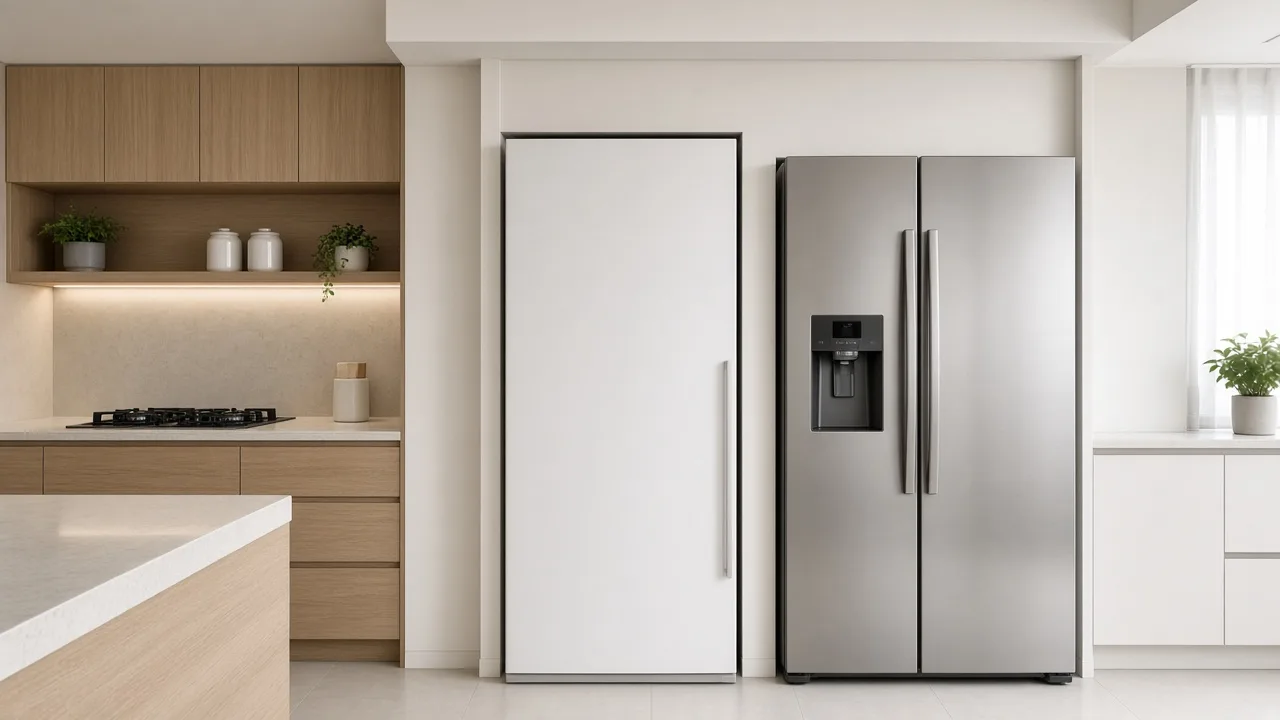
Korean homes have a separate kimchi refrigerator because kimchi needs a steadier, colder and more humid environment than an ordinary refrigerator provides, and because apartment life took away the underground clay crocks that families once used. The first electric model, according to a 2023 academic study, was made by Goldstar in 1984, and the appliance took off after Winia Mando launched “Dimchae” in November 1995. A Gallup Korea survey found that 85% of households owned a kimchi refrigerator in 2025. This guide explains the technology, the housing history behind it and why ownership has begun to slip.
What is a kimchi refrigerator?
It is a refrigerator designed to store and ripen kimchi, usually as a second unit beside the main fridge. According to the Korea Times, it is made to mimic the conditions of a clay crock buried in the ground. It is sold in Korea as a standard household appliance, not a specialist one.
Most models today are vertical, freestanding units. Early ones were different: Winia Dimchae’s product planner told the Korean Culture and Information Service webzine that the first units were horizontal with pull-up lids, imitating the space where crocks were kept, and later became the vertical units that are more convenient to use.
The housing problem behind it
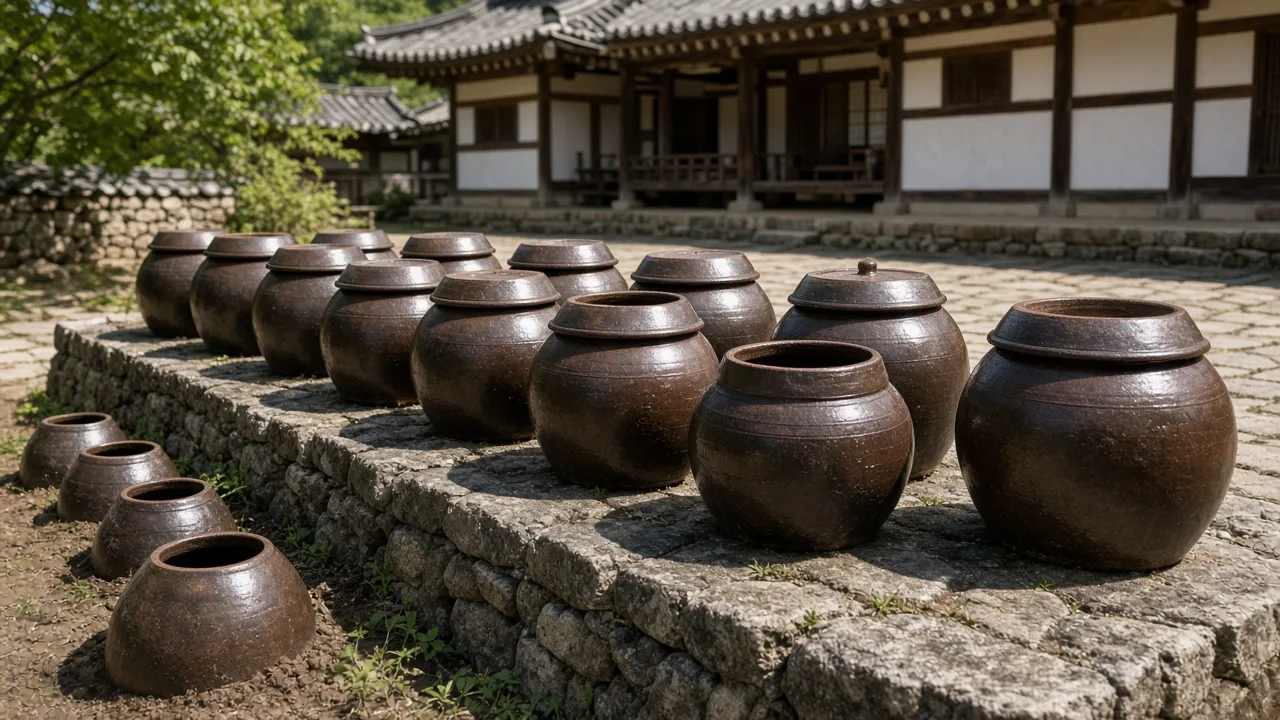
Kimchi is a fermented food, and fermentation depends on temperature. Traditionally, Koreans stored kimchi in clay crocks (kimchittok) buried in the ground in winter. The Korean Culture and Information Service webzine explains that after the spread of apartments and the decline of detached houses, particularly after the 1988 Seoul Olympics, burying crocks was no longer easy. It adds that kimchi kept in a regular refrigerator went bad after about a month.
Two researchers, Tae-Ho Kim of Jeonbuk National University and Hyungsub Choi of the Seoul National University of Science and Technology, put it in historical terms in a 2023 paper. They describe a “kimchi problem” that emerged in the 1960s and 1970s as apartments spread in cities and made traditional preservation methods difficult. Over several decades Koreans tried alternatives, from simple wrappings using materials such as Styrofoam to more complex refrigeration technologies, and these eventually led to the kimchi refrigerator. The paper dates the first electric appliance known as a kimchi refrigerator to Goldstar in 1984. If you want the wider story of why apartments became so common, see why apartments are so popular in South Korea.
How the appliance works
The key idea is to copy the earth. A Winia Dimchae manager said in the webzine that engineers measured the temperature underground several hundred times to understand the crock and found that it stays within about plus or minus 1 degree Celsius. To keep the same stability, the company chose direct cooling, which cools the storage compartment itself, unlike a regular refrigerator that cools with moving air.
The Korea Times explained the difference in 2011, quoting company representatives:
- A regular fridge cools the air. The temperature gap inside can be as large as 10 degrees, according to a Winia Mando representative, and pulling air through the cooling system also removes moisture from the food. That suits dry Western foods but is not suitable for Korean foods with a lot of soup and juice.
- A kimchi fridge cools the walls. The first models had cooling pipes wrapped around the steel wall of the storage room, and the cold spreads evenly as it does through the soil around a crock. This keeps the temperature steady and the humidity in.
- The target is a stable level of sourness. The Korea Times said the aim is to keep acidity between 0.6% and 0.8%, with a pH of around 4.5. As lactic acid rises, crunchy kimchi turns sour and soft. An LG Electronics representative said that the large temperature swings in a normal refrigerator ruin the taste.
The Korea Times added that some models use indirect cooling because it suits a wider range of foods. Modern units have far more sensors than conventional ones, and a Samsung model on sale at the time was cited as using nine sensors for temperature, humidity and door opening.
From storage to ripening
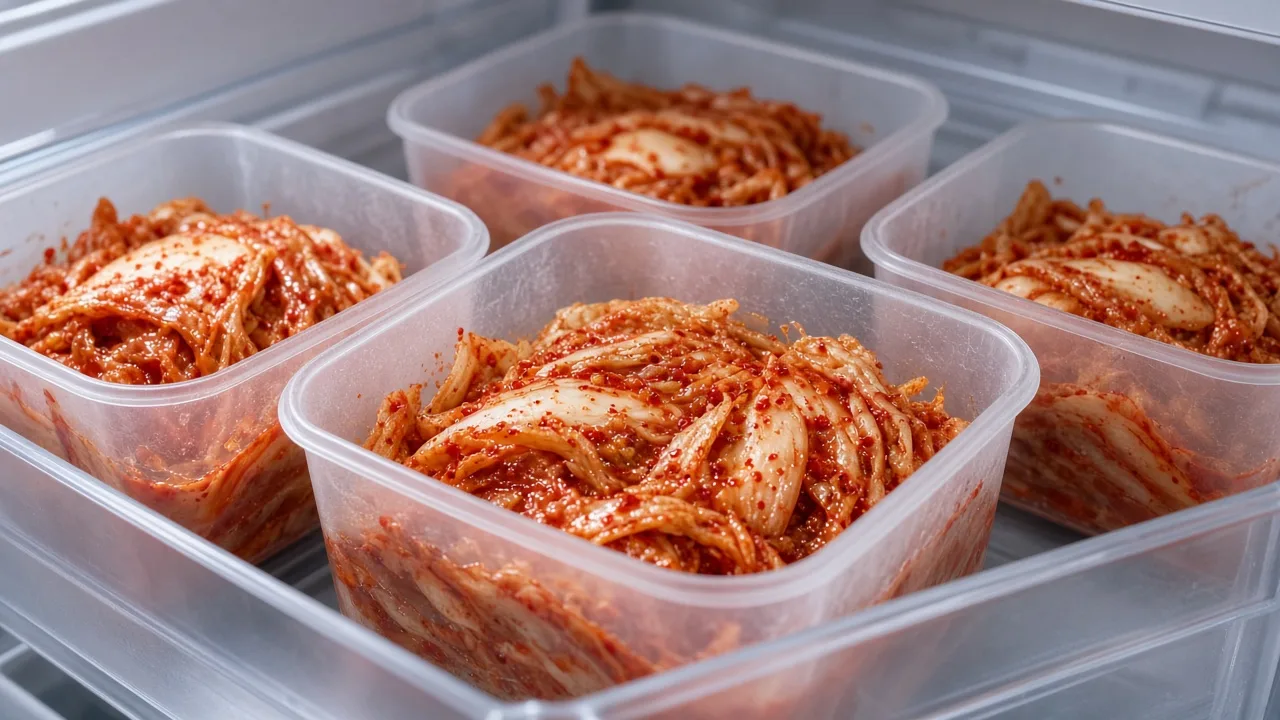
Early models were mostly about storage. The Winia Dimchae manager said current models have a ripening function. The company claims that the period of about one year needed for “fully ripened” kimchi has been shortened to six weeks, which is the company’s statement and not an independent figure. People differ on taste: some want kimchi that tastes as if it were made yesterday, others want it thoroughly ripened, so models offer different stages.
By 2024 the marketing focus had shifted to constant temperature. Digital Daily reported that Samsung’s Bespoke AI Kimchi Plus and LG’s Objet Collection Kimchi Tok Tok both claim a temperature deviation within plus or minus 0.3 degrees, and offer storage modes for other foods. LG’s lists modes for juice, milk, beer, apples and leafy vegetables, and Samsung’s offers up to 24 custom modes covering 500 foods. That reflects a change in use: the Korea Times noted that households already used the appliance for vegetables, fruit and fresh meat, and the Gallup analysis cited by Digital Daily said it is valued for storing a range of ingredients as well as kimchi.
How fast it spread
The Korea Times gave sales figures for Dimchae: about 5,000 units in the first year, 10,000 the next, 80,000 in 1997, 228,000 in 1998 and 530,000 in 1999. In the late 1990s, it said, housewives often formed a rotating savings fund among themselves to buy one. By 2010 the industry sold 1.1 million units a year in a market worth 1.1 trillion won, and 81.3% of households owned one, compared with 11% in 2000. Samsung and LG joined the market after Winia Mando opened it up. Prices ranged from about 500,000 won to 4 million won for a premium model.
The Korea Times credited it with changing household life: people can make kimchi at any time of the year, and it helped stabilize the prices of vegetables and spices because kimchi can be made and kept year-round. It also led to other special refrigerators for rice, cosmetics and wine. These are the paper’s claims and are not independently measured here.
Ownership is slipping
Gallup Korea tracks ownership in its annual survey of people aged 13 and over. The figures it reported were:
| Year | Households that own one |
|---|---|
| 2021 | 90% |
| 2022 | 89% |
| 2023 | 88% |
| 2025 | 85% |
The 2025 survey, which asked 5,251 people across the country except Jeju, also found a large age gap among people living alone: 27% of one-person households headed by someone in their fifties or younger had one, against 79% of one-person households of people in their sixties or older. Gallup noted that younger people more often rely on delivery meals and convenience food and many say they are fine without kimchi at meals, and predicted that fewer one-person households will buy one in future. In 2023 the figure for one-person households as a whole was 44%, against more than 90% for households of two or more, according to Digital Daily’s report of that survey.
A manufacturer’s claim that more than 98% of Korean homes have one appears in the Korean Culture and Information Service webzine. The Gallup surveys give a lower and declining number, so the 98% figure should be read as a company statement, not a survey result. The relationship between young people and food delivery is described in our guide to Korean food delivery.
What to know if you move into a Korean home
- Expect to see one in a family home. Most households of two or more people have one, according to the 2023 Gallup figures reported by Digital Daily.
- It is not only for kimchi. Many people use the compartments for fruit, vegetables and drinks, and modern models have storage modes for that.
- Expect space to be planned for it. The Winia Dimchae webzine says new apartments are designed with a place for the kimchi refrigerator, which is the manufacturer’s account.
- Do not store kimchi in the main fridge for long. The webzine says kimchi kept in a regular refrigerator went bad after about a month, which is the problem the appliance was invented to solve.
- Younger people living alone often do without one. See how Korean apartments compare with European ones for more on how space is used.
FAQ
Why do Koreans have a separate kimchi refrigerator?
Kimchi needs a steady, cold, humid environment to ferment properly without turning too sour. A regular refrigerator cools with moving air and has bigger temperature swings, so Koreans developed an appliance that copies a buried crock.
When was the kimchi refrigerator invented?
A 2023 academic paper dates the first electric kimchi refrigerator to Goldstar in 1984. Winia Mando launched Dimchae in November 1995, and it is the product that made the appliance widespread.
How does it differ from a normal refrigerator?
It usually cools the walls of the storage compartment directly instead of blowing cold air, which keeps the temperature steadier and the humidity higher. Many models also have ripening and storage modes.
What percentage of Korean households have one?
Gallup Korea found 85% in 2025, down from 90% in 2021. Ownership is much lower among younger people living alone.
Can you use it for other foods?
Yes. Households use them for vegetables, fruit, meat and drinks, and recent models from Samsung and LG include storage modes for many foods.
Sources and further reading
- Gallup Korea, “Market 70 2025 (6): ownership of 18 kitchen, environment and health appliances” (13 November 2025, Korean): gallup.co.kr
- Tae-Ho Kim and Hyungsub Choi, “The birth of the kimchi refrigerator: Fermented foods, new living environment, and refrigeration technologies” (Food Science and Industry, September 2023): fsni.or.kr
- Korean Culture and Information Service webzine, “Muse” interview with WiniaDimchae (November 2021): korean-culture.org
- The Korea Times, “Kimchi refrigerator maintains taste of fermented food” (21 November 2011): koreatimes.co.kr
- Digital Daily, “National appliance: Samsung and LG target four seasons with constant-temperature mode” (4 October 2024, Korean): ddaily.co.kr