
Korean photo booths are self-service studios where friends or couples take four photos and walk away with a printed strip a minute later. They are not a niche: the National Tax Service data reported by Yonhap show that taxable sales of instant-photo businesses rose from 134.4 billion won in 2020 to 319.6 billion won in 2024 (about US$96 million to US$228 million). The same data show closures rose 3.5 times, so the boom is also crowded.
Last updated: October 31, 2026
Key takeaways
- A four-cut booth is unmanned, takes a photo about every 10 seconds and prints a vertical strip. A session costs a few thousand won in the examples reported.
- Sales in the business were 2.4 times higher in 2024 than in 2020, but closures rose 3.5 times, according to NTS data reported by Yonhap.
- The sources point to low prices, shareable photos, a physical keepsake and limited-edition frames with K-pop and sports stars.
- Store counts quoted by companies are not independent. No census of all booths was found.
Photo booths at a glance: Korean photo booths are unmanned self-service studios where a session takes four photos and prints a vertical strip within about a minute. Sales at instant-photo businesses were 2.4 times higher in 2024 than in 2020, but closures rose 3.5 times, so the photo booth boom is crowded. Cheap sessions, shareable photos and frames explain why the photo booth habit stuck.
What is a four-cut photo booth in Korea?
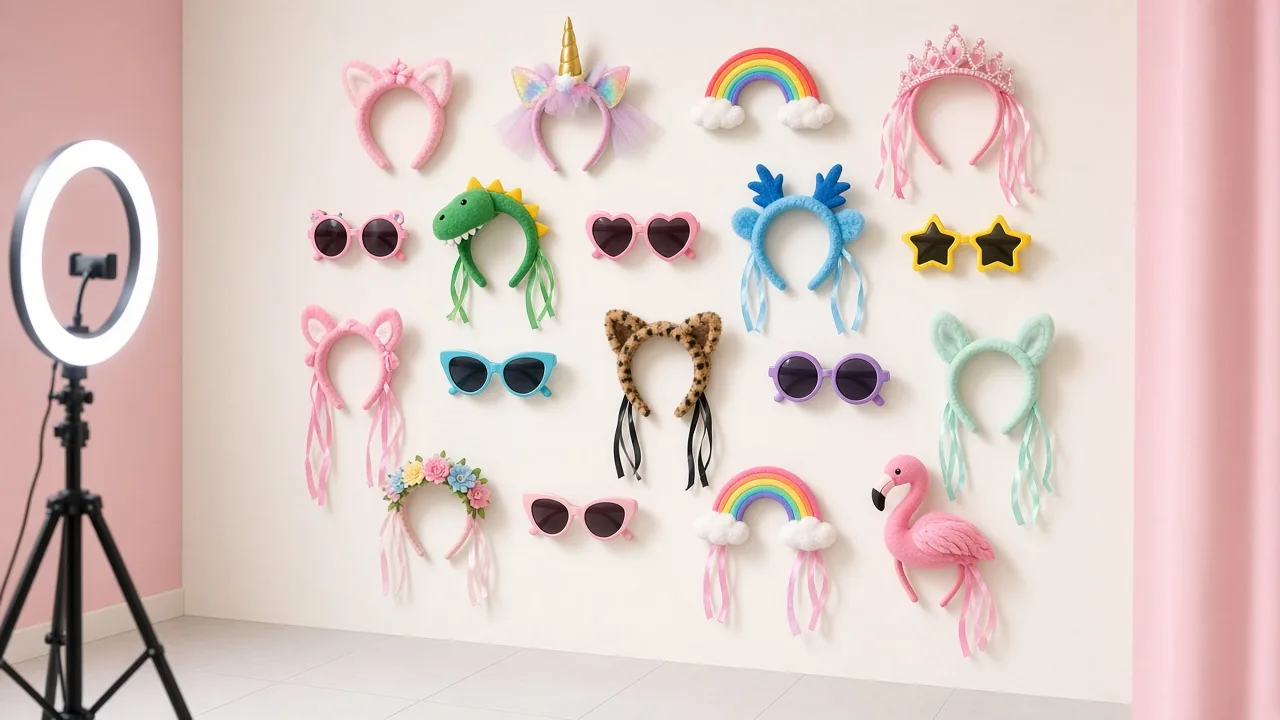
According to the Korea Herald, the photos “are taken using automated cameras, lighting and backdrops,” and the studios are unmanned and open 24 hours. Instructions are available in English, Japanese and Chinese. The leading brand, Life Four Cuts, is named after its main product, a vertical strip of four frames which the Herald compares to traditional passport photos.
El País English visited an Insadong studio in 2023. Customers choose the number of photos (one, two, three, four, six or eight), sit on a bench under two spotlights, and the camera takes a picture every 10 seconds. Most people take four. Two copies are printed, “that way a couple can each have one,” a user said, and photos can be downloaded by scanning a QR code. Props are free in many studios.
How do Korean photo booths work? A step list
- Choose a studio and a frame or background.
- Pay at the machine, where the price is shown.
- Pick the number of shots and put on props.
- Pose during the countdown. The Herald describes a 10-second countdown and a beep.
- Choose your favourite frames on the screen.
- Collect the printed strip and scan the QR code if you want digital copies.
How much does a Korean photo booth cost?
Prices differ by brand and year. The Korea Herald reported in 2025 that at Life Four Cuts two prints cost 4,000 won (about US$2.86), four prints 8,000 won and six prints 12,000 won. El País reported in 2023 that one Insadong studio charged 5,000 won (about US$3.57). These are two studios and two years, so treat them as examples. Check the price on the machine.
How big is the business?

Independent evidence first. The National Tax Service supplied data to a National Assembly member’s office, and Yonhap reported them in February 2026 for the “instant photo machine operation” business:
| Year | Taxable sales (billion won) | Closures |
|---|---|---|
| 2020 | 134.4 | 176 |
| 2021 | 133.7 | 195 |
| 2022 | 247.1 | 296 |
| 2023 | 290.6 | 514 |
| 2024 | 319.6 | 611 |
Yonhap read this as a start-up rush followed by tougher competition. That interpretation is the reporter’s. The data end in 2024. National Tax Service survival statistics for the 100 living industries describe the first year of business as the main hurdle, which is consistent with the rising closures.
Company numbers are different. El País reported in 2023 that Life4Cuts had 315 locations and about 10,000 booths, with 22 million users a year, according to the company. The Korea Herald reported in 2025 that Life Four Cuts had 120 million visits since 2017 and about 410 stores, according to the company. Those are company-supplied figures for one brand, not a census of all booths.
Why are Korean photo booths so popular?
No source gives a single cause. Four explanations recur.
Why do young people want a printed photo?
El País noted that young people who grew up with digital photography still like printed photographs. A father interviewed there said his own generation “never print photos anymore,” whereas his 13-year-old daughter “sees these photos as a way to have tangible memories of her friends and family.”
Is it cheap and made for sharing?
A Life Four Cuts marketing official told the Herald the pictures “come with great quality at a budget-friendly price” and that the format is easy to share online. A 20-year-old student said the booths retouch skin to look brighter, “which is cost-friendly for college students.” On other forms of sharing, see why KakaoTalk is so widely used.
Do limited frames and fandom matter?
The Herald reported that brands partner with K-pop stars, actors, cartoon characters and baseball players. One example was an IU frame available for about a month. The company official said limited editions “could trigger FOMO among people and lead to more repeat visits.” One fan said it was about “the fact that I printed a photo of me standing next to my favorite singer.”
Where do people go?
The booths are concentrated where young people gather, such as Seongsu-dong, Hongdae, Insadong and near Namsan Tower, according to the two articles. Seoul’s concentration of people is part of the context (see why South Korea is so concentrated in Seoul). The sources do not compare booth density across regions.
Who uses Korean photo booths?
The articles quote friends marking milestones, couples who keep one print each, a father and his 13-year-old daughter, fans and tourists. One interviewee goes twice a month, sometimes alone. Groups of up to 10 fit in some booths, depending on the studio, according to El País.
Is it a new thing?
Partly. A father in his early forties told El País he used booths about 15 years ago, when they printed small stickers. That is one quoted memory, not a documented history. The current wave is unmanned, chain-based and designed for social media. Booth photos are made to be shared, often through chat apps; see why KakaoTalk is so widely used in South Korea. Photo keepsakes also mark family milestones such as a baby’s first birthday; see doljanchi.
Has it gone abroad?
El País said in 2023 that Life4Cuts had expanded into the United States, Japan and the United Kingdom. The Korea Herald said in 2025 that Life Four Cuts and Photomatic were available in Singapore and London.
Tips for visitors, expats, and students at photo booths
Visitors: budget a few thousand won per session, bring friends and use the countdown. Expect to scan a QR code if you want digital copies.
Expats: it is a cheap group activity, and a frame can be a keepsake for a farewell or a birthday. Check the price first, because it varies by brand and studio.
Workers or students: as an everyday outing, the booth costs less than a meal. The tax data suggest the market is crowded, so frames and locations vary a lot.
Common mistakes: assuming every studio has the same price, ignoring the countdown, and treating company store counts as national totals.
Worked examples: what the numbers and prices mean
Sales growth. The National Tax Service figures reported by Yonhap show taxable sales of 134.4 billion won in 2020 and 319.6 billion won in 2024, which is 2.38 times as much, or a growth of about 24% a year if the four years are averaged (319.6 divided by 134.4, then the fourth root). Year by year the picture is uneven: sales were flat in 2021 (133.7 billion won, down 0.5%), jumped by about 85% in 2022 (to 247.1 billion won), and grew about 18% in 2023 and 10% in 2024. In dollars, 319.6 billion won is about US$228 million at 1,400 won per dollar.
Closures. Closures rose from 176 in 2020 to 611 in 2024, which is 3.5 times as many. They grew fastest in 2022 (up 52%) and 2023 (up 74%), and more slowly in 2024 (up 19%). Sales and closures both rising is consistent with Yonhap’s reading of many openings and tougher competition, but the data count tax filers, not individual booths, so they do not tell you how many booths there are. The National Tax Service compiles its 100 living industries figures by industry category and by region, not by individual booth, so these figures cannot be read as a count of booths.
A session for a group. At the Korea Herald’s 2025 price of 8,000 won for four prints, a group of four friends who split the cost pays 2,000 won each (about US$1.43). A couple who split 8,000 won pay 4,000 won each. The Herald’s 4,000 won for two prints is 2,000 won per print, and 12,000 won for six is also 2,000 won per print, so on those prices the cost per print does not change with the number of prints.
More common mistakes about Korean photo booths
- Reading “410 stores” as the size of the market. It is one company’s figure for its own stores.
- Comparing prices across years. The Herald’s 2025 prices and El País’s 2023 Insadong price are for different studios and years.
- Expecting a staffed studio. Many are unmanned, though El País says some have staff offering extras.
- Assuming growth is guaranteed. The 2020 to 2024 tax data show both rising sales and rising closures.
Questions readers ask
What is a four-cut photo booth in Korea?
A self-service studio where automated cameras take a series of photos and print them on a vertical strip. “Four cuts” refers to the four-frame format.
How much does a Korean photo booth cost?
Korea Herald reported 4,000 won for two prints at Life Four Cuts in 2025. El País reported 5,000 won per session at one Insadong studio in 2023.
How big is the Korean photo booth business?
National Tax Service data reported by Yonhap show taxable sales of 319.6 billion won in 2024, 2.4 times the 2020 figure, with 611 closures that year.
What is Life Four Cuts?
A leading booth brand that began in 2017 and, according to the company, had about 410 stores in Korea in 2025.
Are Korean photo booths staffed?
Many are unmanned and open 24 hours, according to the Korea Herald, though El País says some have staff offering extras.
Are photo booth closures rising in Korea?
Yes, according to National Tax Service data reported by Yonhap: 611 closures in 2024 against 176 in 2020, while taxable sales rose 2.4 times over the same period.
A cheap, fast format in a crowded market
Korean photo booths are a small-business formula: a cheap, fast experience that produces an object you can hold and share, set where young people already gather. The tax data show the sales were rising fast to 2024 and that closures were rising too. There is no evidence in the sources that the number of booths will keep growing, and none that it will fall. The honest conclusion is that the format is established and competitive.
Where the facts come from
Checked October 31, 2026.
- Yonhap News: instant photo studios’ sales 2.4 times in four years, closures 3.5 times (Korean, February 17, 2026; NTS data via a National Assembly member’s office)
- The Korea Herald: Say ‘kimchi’: How photobooths have filled Korean streets (June 7, 2025)
- EL PAÍS English: Paper nostalgia, retro photo booths in South Korea explode in popularity (June 21, 2023)
- National Tax Service: 100 living industries, status of newly registered businesses by industry and region (open data portal, primary source)
- National Tax Service: survival rates of the 100 living industries (press release, April 29, 2025)