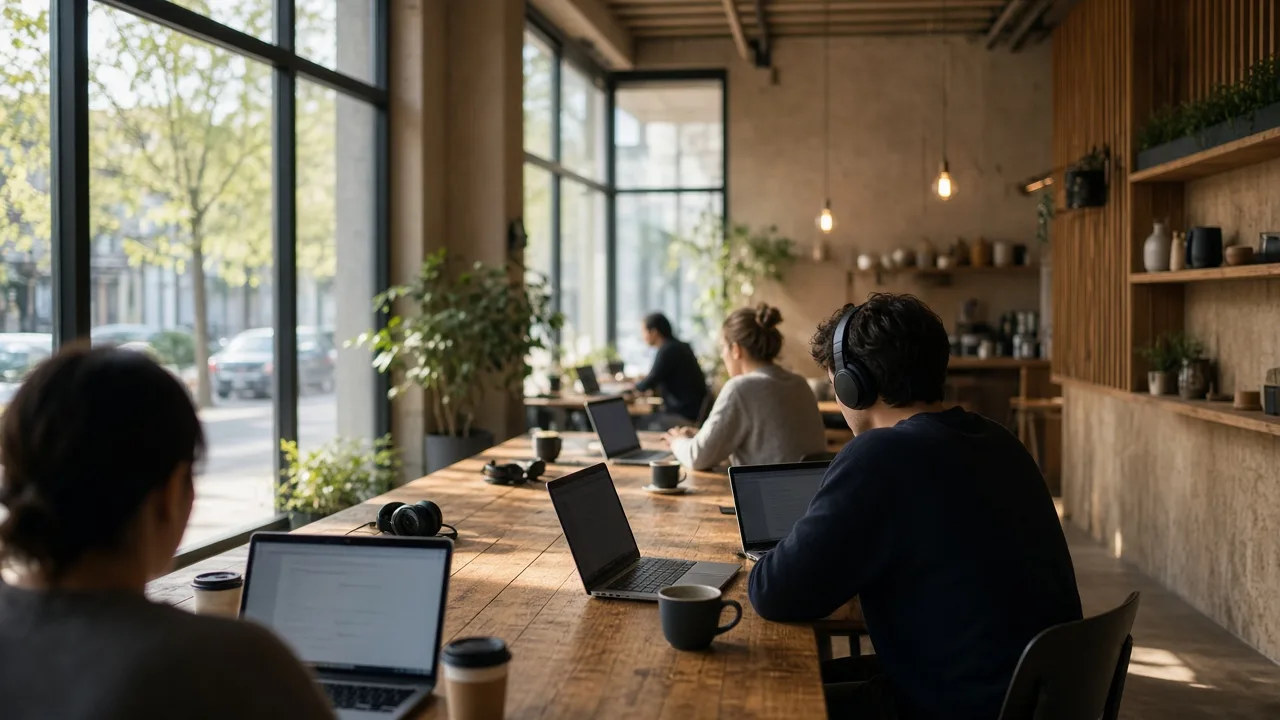
Cagong is the Korean word for studying or working in a cafe. It joins “ca” from cafe and “gong” from gongbu, the Korean word for study, and it describes a habit you will notice quickly in Seoul: laptops, headphones and a single cup of coffee at a table for four. The habit has made cafes a kind of shared study room and office, and it has also started a quiet argument between customers and owners over how long a coffee entitles you to stay. This guide explains where cagong comes from, what the numbers say and how the rules differ from cafe to cafe.
What does cagong mean?
According to the Korea JoongAng Daily, cagong combines the first syllables of “cafe” and “gongbu.” The Korea Herald adds the suffix “jok,” meaning tribe, to describe the people themselves: cagongjok, “a tribe of people who study at cafes.” The Herald called them the most controversial group of cafe-goers in South Korea.
The people behind the word are varied. The JoongAng Daily describes a growing group of solo customers, largely students, freelancers and remote workers, and notes that retirees and older people also appear. The Korea Herald found that cafes are used for self-improvement as well as homework. In a Job Korea survey of 182 office workers from the millennial and Gen Z group, 3 out of 5 used cafes for work and study. Among them, 37.2% studied foreign languages, 32.2% worked on expertise in a specific field and 31.4% prepared for career certifications. That is a small sample, so treat it as an illustration, not a national figure.
Why do Koreans work in cafes?
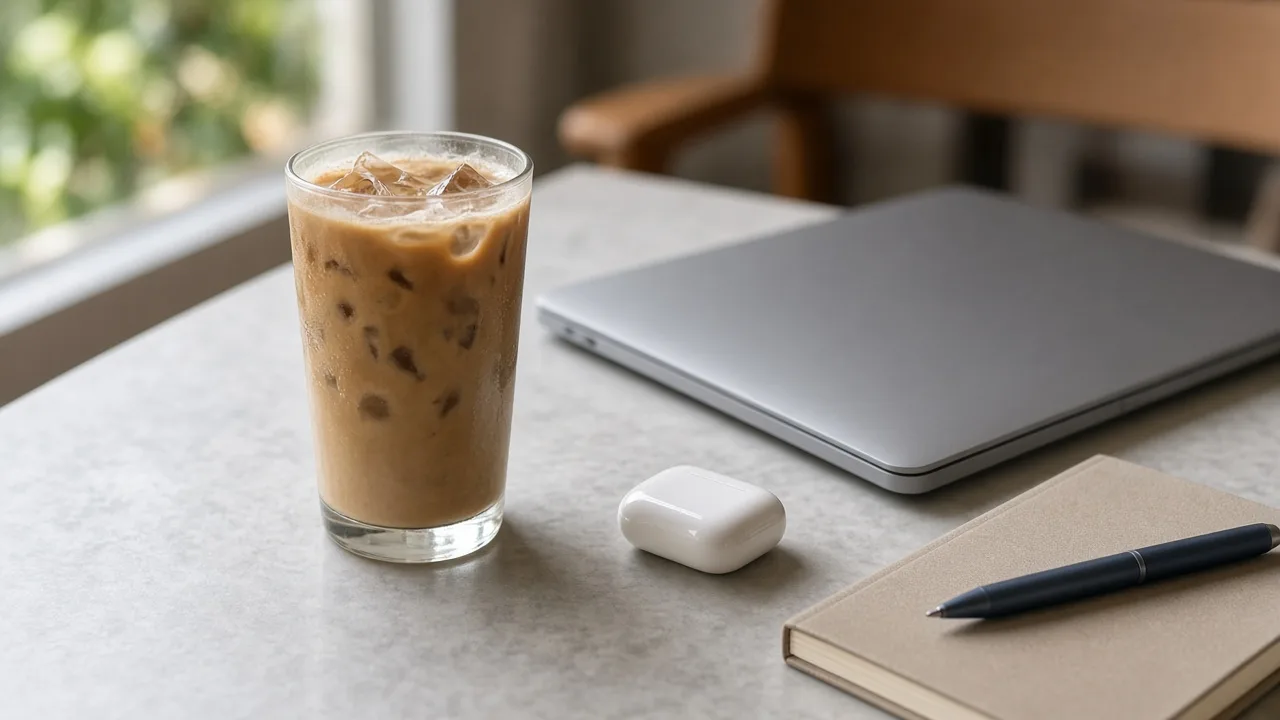
Several reasons recur in the reporting:
- Cafes are everywhere. The Korea Herald noted that Korean urban areas arrange housing complexes and shopping areas close together, so a cafe is easy to reach and people can change their surroundings quickly. That density is part of a wider pattern described in why South Korea is concentrated in Seoul. Statistics Korea counted 100,729 coffee shops in 2022, twice the number of convenience stores, according to the JoongAng Daily. For how those stores spread, see why South Korea has so many convenience stores.
- Home is not always a good office. Two young people living in studio apartments told the Herald that they cannot concentrate at home, one because he gets lazy and another because his room feels stuffy and cramped. A cafe separates living space from working space.
- Company without conversation. Professor Lee Eun-hee of Inha University told the Herald that cafes give people living alone a social comfort, and that customers create their own enclosed space with noise-canceling headphones. Working alone while being with other people is almost paradoxical, the Herald observed.
- Few alternatives. In a 2021 Hankook Research survey of 1,000 people, 29% had done solitary tasks at a cafe in the past year, including 60% of those in their 20s. Nearly half of the respondents said they had no other place to go, while a majority of those in their 20s liked the relaxed atmosphere and the drinks and snacks.
- A library feels rigid. One cafe owner told the JoongAng Daily that many people prefer a cafe with food, drink and service over a library where the atmosphere is quiet and rigid.
Professor Lee Eun-hee also linked the habit to the pressure of a hypercompetitive society and to flexible working hours and workspaces in the digital era, where technology lets people study or work almost anywhere and cafes are a popular choice. The Hankook Research survey adds a small sign of how the habit moves with events: 48% of respondents said they had spent less time studying and working at cafes than before the pandemic, which led the Herald to expect the number of cagongjok to rise as COVID-19 restrictions eased.
Coffee itself is part of the picture. The JoongAng Daily cited Euromonitor figures that put Korea at the second-highest coffee consumption in the world, averaging 405 cups per person in 2023, double the global average. One graduate student told the Herald he orders a 4,500-won coffee and stays about three hours, and that coffee helps wake his brain and raises his productivity. A cafe is also a place where, as the Herald put it, people work alone while being with other people.
Why some owners dislike it
The tension comes from simple arithmetic. According to the Korea Food Industry Research Institute, as cited by the JoongAng Daily, a non-franchise cafe with eight tables must turn each table over every 1 hour and 42 minutes to break even on a 4,100-won cup of coffee. The Korea Herald cited the same institute’s 2019 figures. A customer who buys one coffee and stays for three hours, as one graduate student told the Herald he does, takes up a table for much longer than that.
The business climate adds pressure, and many of these owners are small operators, a path explained in why retired Koreans open chicken shops and cafes. The JoongAng Daily reported closure rates for coffee and beverage stores in Seoul of 2.8% in 2022, 4.2% in 2023 and 4.3% in 2024, based on the Seoul Commercial District Analysis Service. Separately, the National Tax Service’s business statistics, reported by Mediapen in May 2025, showed 95,337 coffee and beverage outlets in the first quarter of 2025, 743 fewer than a year before, the first first-quarter decline since the series began in 2018. These two counts use different methods and should not be mixed.
To see why the numbers cause friction, take the figures from the two articles side by side. The research institute’s break-even point is 1 hour and 42 minutes, which is 102 minutes, for a 4,100-won cup. The graduate student’s 4,500-won coffee and three-hour stay is 180 minutes, so he occupies a table for roughly 1.8 times the break-even time while paying only a little more than the benchmark price. This is an illustration based on one customer and one benchmark, not a measurement of any real cafe, and it ignores that cafes also have slow hours when an occupied table costs the owner little. It does show why owners who run at the margin feel the pinch most during exam periods. A cafe owner near a Seoul university told the Herald that his shop sees a surge of cagongjok at midterms and finals, which is likely to reduce revenue, and he sells Americanos at only 1,900 won, so a long stay leaves very little margin.
The cost side is also moving. The same owner worried about higher electricity bills for the coming summer, as global energy costs and the losses of Korean utility firms pushed rates up. That is context from 2023, not a current rate, but it explains why outlets and air conditioning become part of the argument.
The reaction has varied:
- Time limits and fewer outlets. The JoongAng Daily reported that some cafes cut off internet and blocked power outlets, swapped furniture for less comfortable seating, imposed time limits or created “No 20s” zones. In 2025 it added that small independent cafes had banned stays of more than two hours or disabled outlets.
- Legal language. The same paper reported a 2009 Supreme Court ruling stating that prolonged sitting that significantly hinders a cafe’s business can amount to punishable business interference. Under Article 314 of the Criminal Act, interference with another person’s business is punishable by up to five years in prison or a fine of up to 15 million won. This is the court’s reasoning as quoted by the newspaper, not general permission to remove customers after a set time.
- A drink-plus-snack request. One owner near a Seoul university told the Herald that he might post notices asking customers to buy a drink and one item of bread or snack.
Cafes that welcome cagong
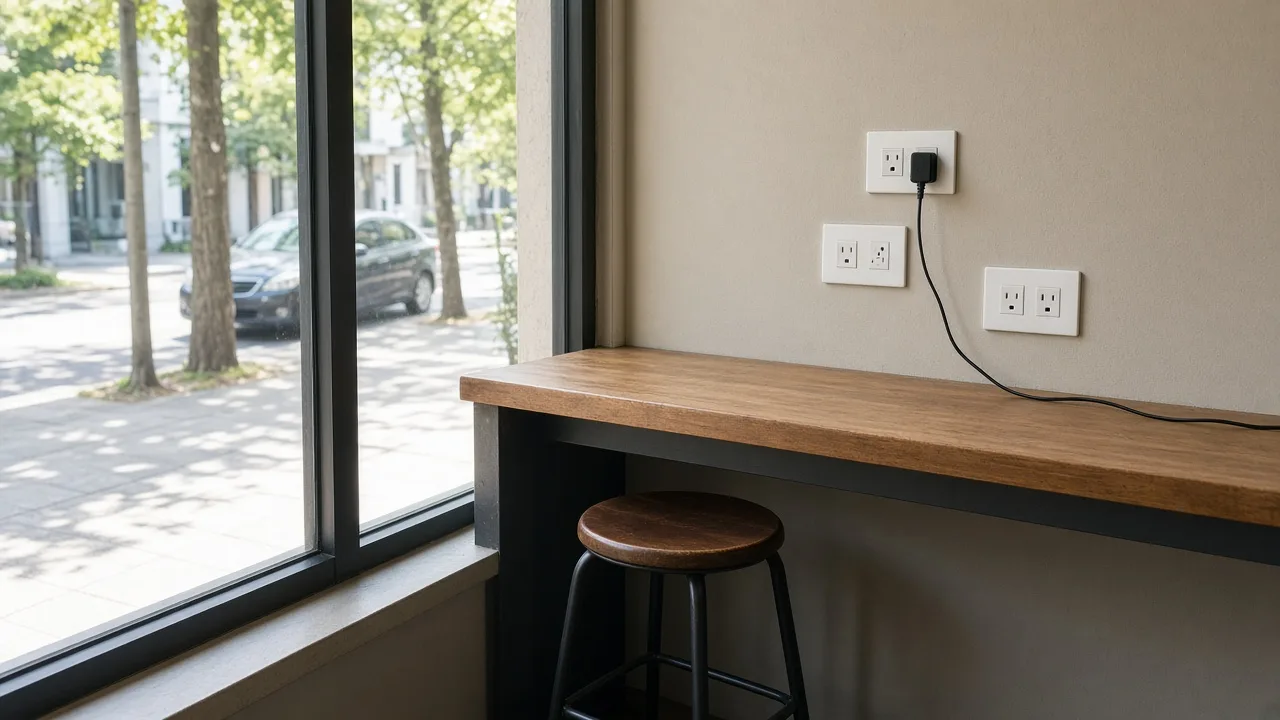
Other owners have turned cagong into a business model. The JoongAng Daily described Classico, an independent cafe in Bundang that replaced five four-person desks with four desks and three smaller tables, all with outlets. Its owner said profits rose about 30% between September and November, which is the owner’s own claim. In Seodaemun District, Viva Bossa was built for long stays, with large desks, outlets and cushioned chairs. The paper also reported that no major Korean coffee brand officially limits hours of stay or bans laptops, and that Starbucks Korea added private seats with desk dividers in 2021.
The new category has its own audience. According to the JoongAng Daily, an IT company worker surnamed Lee runs an Instagram account called Nomad Workspace that introduces cafes prioritizing comfort and productivity, and it gained more than 18,300 followers in less than a year. She said she used to think cagong users were viewed only negatively, but cafes that welcomed them began to do well by word of mouth, and she described the local cafe scene as polarized, with some cafes embracing cagong and others firmly against it. Viva Bossa’s owner, Kang Han-seong, said he saw a gap because people who work from home, students and freelancers felt their choice was limited to big chains, and he was surprised to see retirees and older people come as well.
Consumer science professor Lee Young-ae of Incheon National University told the JoongAng Daily that cagong is “not a fleeting trend but an evolving cultural phenomenon,” and argued that a customer base that visits four or five times a week can keep a cafe sustainable. Her view is one expert’s opinion, and owners who face exam-season crowds may weigh it differently, but it explains why the same behavior is a problem in one shop and a business plan in the next.
The welcome at Starbucks Korea changed in August 2025. According to the Korea JoongAng Daily, a notice to stores said customers would no longer be allowed to use desktop computers, printers, partitions or multi-plug power strips. The company said staff would give verbal notice, and customers who leave belongings on tables for long periods or occupy a multi-person table alone may be asked to move. A spokesperson said the guidelines followed complaints and were meant to improve comfort and reduce the risk of loss or theft when seats are left unattended. Laptops were not mentioned in the restrictions.
Cagong manners for visitors
- Order something, and order again for a long stay. Professor Lee told the Herald that the stay should be appropriate to the purchase.
- Keep your setup small. A laptop and phone charger is common. Printers, desktop computers, dividers and power strips are what have led to complaints at Starbucks Korea.
- Do not leave belongings to hold a seat for long periods. Starbucks Korea said it may ask people to move, and the notice referred to theft risk.
- Take a smaller table when you are alone, especially at busy times. The Herald noted that a single person occupying a table for four is a common sight, and that is part of the complaint.
- Read the signs. Rules differ by cafe, and some independent shops publish limits.
- Look for cafes built for it. The JoongAng Daily described a new category of cafes designed for people working alone.
Frequently asked questions
What does cagong mean in Korean?
Cagong is a shortened word that combines “cafe” and “gongbu,” meaning study. It means studying or working in a cafe. The people who do it are sometimes called cagongjok.
Is cagong allowed in Korean cafes?
It depends on the cafe. The JoongAng Daily reported in January 2025 that no major Korean coffee brand officially limits the hours of stay or bans laptops, though some small cafes set limits and Starbucks Korea restricted equipment such as printers and desktop computers in August 2025.
How long can I stay in a Korean cafe?
There is no general rule. Some independent cafes ban stays over two hours, many do not limit time, and the right length depends on what you buy and how busy the cafe is.
Why are there so many cafes in Korea?
Statistics Korea counted 100,729 coffee shops in 2022, twice the number of convenience stores, according to the JoongAng Daily. Tax data reported by Mediapen showed the number of outlets falling slightly in the first quarter of 2025.
Do Koreans really study in cafes?
Yes, though not everyone does. In a 2021 Hankook Research survey, 29% of respondents had done solitary tasks at a cafe in the past year, including 60% of people in their 20s.
Sources
- Korea JoongAng Daily, “Korean cafes welcome students and workers as cagong trend invigorates industry” (23 January 2025): koreajoongangdaily.com
- Korea JoongAng Daily, “Leave your printer at home: Starbucks Korea cracks down on people working, studying all day in cafes” (7 August 2025): koreajoongangdaily.com
- The Korea Herald, “What ‘cagongjok’ reveal about Korean culture, psyche” (20 June 2023): koreaherald.com
- Mediapen, “Cafes and convenience stores close one after another in the recession” (25 May 2025, Korean; citing National Tax Service data): mediapen.com
- National Tax Service, “100대 생활업종 사업자현황” (operating-business status for the 100 everyday-life business categories, including coffee and beverage shops; monthly series), via the Public Data Portal: data.go.kr
- Ministry of Government Legislation, National Law Information Center, Criminal Act Article 314 (업무방해, Interference with Business): law.go.kr