
Korean trash bags are official bags that households must buy for general waste, and the price of the bag is how you pay for waste collection. The system, called jongnyangje (종량제), a volume-based waste fee, has existed since 1995. As of October 31, 2026, a 20-litre household bag costs 490 won (about US$0.35) in all 25 Seoul districts, according to the Seoul price information page.
Last updated: October 31, 2026
Key takeaways
- General waste must go in an official bag bought from your local government’s scheme. Recyclables and food waste have separate rules.
- Seoul’s 20-litre bag costs 490 won in every district; 50-litre and 10-litre bags cost 1,250 and 250 won as of September 2025 (Hankyung).
- The system began in 1995 and, in its first decade, total waste fell about 24% while recycling rose 2.8 times (UNESCAP, 2006 ministry data).
- Using a plain plastic bag for general waste can bring a fine (200,000 won under a fine schedule of the Wastes Control Act, as listed in a law.go.kr table).
Trash bags at a glance: in Korea, general household waste must go in official volume-based trash bags that you buy, and the price of the bags pays for collection. A 20-litre bag costs 490 won in Seoul, a 50-litre bag 1,250 won and a 10-litre bag 250 won. Using ordinary plastic bags instead of the official trash bags can bring a fine, and food waste and recyclables follow separate rules.
What are Korean trash bags (jongnyangje bags)?
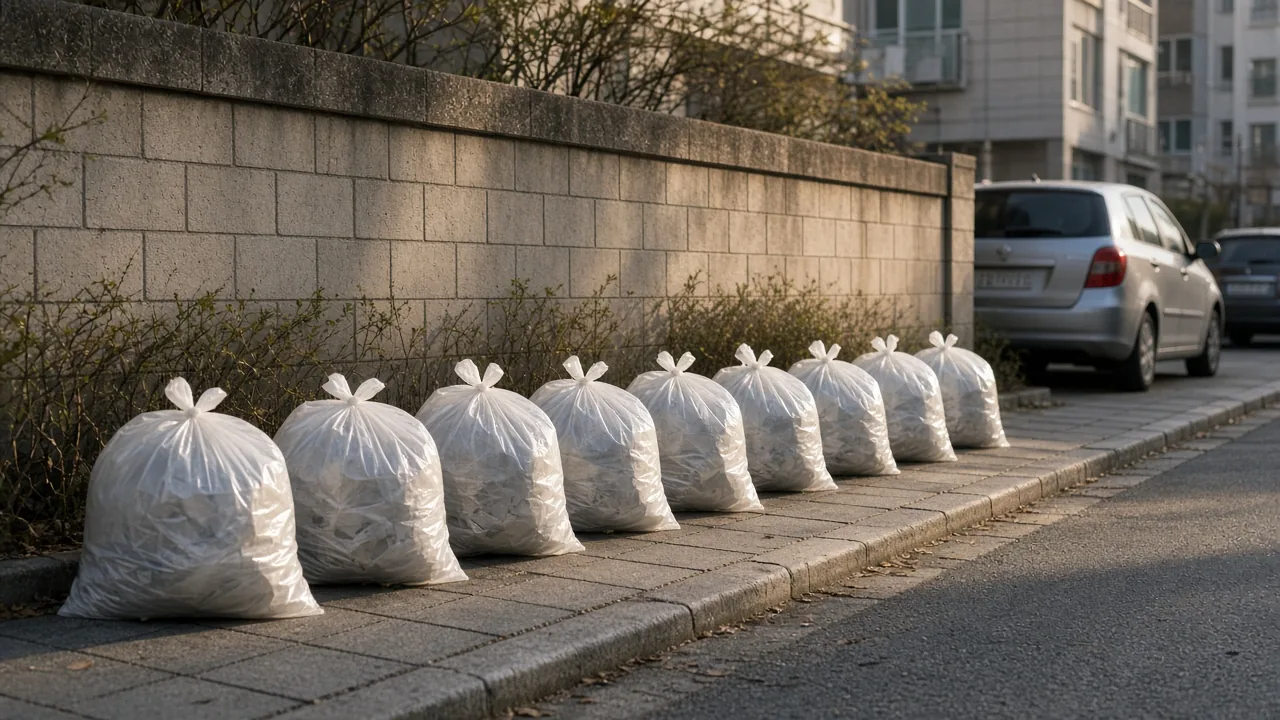
Under the volume-based waste fee, households put ordinary general waste, meaning waste that cannot be recycled, in a bag issued under the local government’s scheme. Each municipality sets its price. In practice:
- General waste goes in the official bag. The bag is the unit of payment: a bigger bag costs more.
- Recyclables are separated and put out without a bag fee.
- Food waste is a separate stream with its own system.
- Public bins are rare (see why public trash cans are hard to find in Seoul), so people carry waste home.
Why did Korea introduce it?
According to the UNESCAP case study, the early 1990s brought rapidly growing waste as the middle class grew. Collection was paid for by taxes or flat fees that did not depend on how much was thrown away, giving households no reason to reduce it. The Ministry of Environment introduced the volume-based fee in 1995. UNESCAP describes its main goal as reducing the amount of waste at the point of disposal, with an indirect effect of raising recycling.
Did the volume-based fee work?
UNESCAP cites ministry data for the early years:
| Measure | Result |
|---|---|
| Total waste per day | Down about 24%, from 58,118 tonnes (1994) to 50,007 tonnes (2004) |
| Waste per person per day | Down about 23%, from 1.33 kg (1994) to 1.03 kg (2004) |
| Recycling per day | 2.8 times higher: 8,927 tonnes (1995) to 24,588 tonnes (2004) |
| Estimated benefits | More than 8 trillion won from avoided treatment and recycling revenue |
These numbers are about 20 years old, so they show the early effect rather than today’s performance. UNESCAP says the policy works best alongside upstream measures such as extended producer responsibility.
How much does a Korean trash bag cost in Seoul?
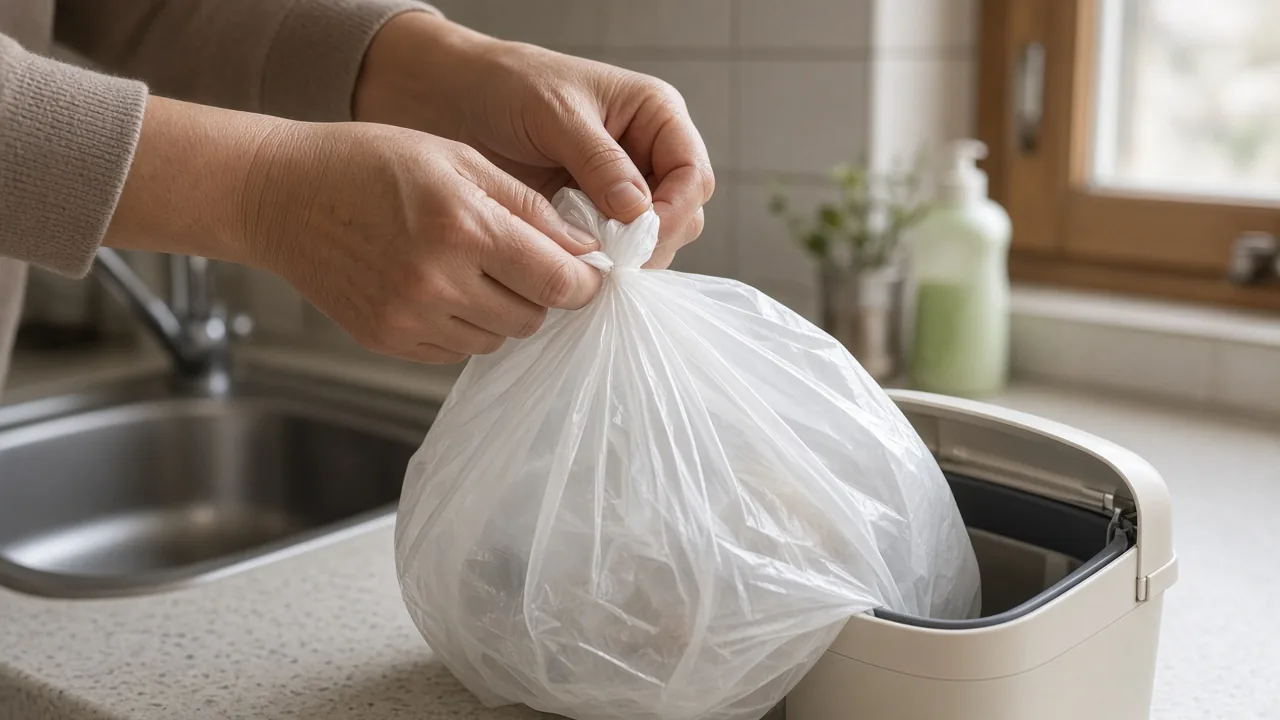
The Seoul price information page lists 490 won for a 20-litre household bag in all 25 districts (checked October 31, 2026). The Hankyung article of September 2025 gives the rest of Seoul’s range: 50 litres at 1,250 won and 10 litres at 250 won, unchanged since 2017. Public price data and district office pages checked on 31 October 2026 list the same three prices.
Worked example (illustration): a household that fills one 20-litre bag a week pays about 490 × 52 = 25,480 won a year (about US$18). A 50-litre bag every week would be 1,250 × 52 = 65,000 won (about US$46).
Is the price going up?
Hankyung argued in September 2025 that cost pressure is building: Seoul’s waste treatment cost was 170,000 won per tonne in 2024 (155,000 in 2022), the fee for sending waste to the metropolitan landfill rose to 132,000 won per tonne (89.6 billion won in 2024), and two of Seoul’s four incinerators are nearly 30 years old. In effect, what residents pay for bags does not cover the cost of treatment, and the difference comes from taxes.
As of October 31, 2026, the Seoul price page still shows 490 won, and Korean news reports in March 2026 quoted district offices saying they had no plans to raise prices, which would need a district ordinance change. Check the page before relying on the price.
What happens if you don’t use the official bag?
Using a plain plastic bag or cloth wrap for general waste can bring a fine. A fine schedule under Article 68 of the Wastes Control Act, shown in a law.go.kr table, lists 200,000 won for that case. Gangnam District lists 100,000 to 200,000 won for unauthorised dumping and mixed disposal. Local rules and enforcement vary, so ask your district office.
What do locals do with Korean trash bags?
- Buy the bags in advance and keep a few at home.
- Compress and sort. Since you pay by volume, people press down waste and separate recyclables and food waste.
- Follow the building’s schedule. Ask your landlord, building manager or neighbours which day and place waste goes out (see what gwanribi is for building costs).
- Buy at neighbourhood shops. See why South Korea has so many convenience stores; ask your district office which stores sell the bag for your district.
Buying and using the right bag for your district
Visitors: you are unlikely to need one, but you will notice few public bins. Carry rubbish with you until you find a bin at a station, shop or your accommodation.
Expats and renters: buy the bags for your district. Ask your district office which bag your address requires. Don’t mix recyclables or food waste into the general bag.
Workers and students in shared housing: agree who buys the bags and sort the household’s waste together.
Common mistakes with Korean trash bags: using a plain plastic bag, putting food waste in the general bag, and not checking which bag your district requires.
What goes into Korean trash bags in Seoul?
Seoul published a standard set of disposal rules for about 60 items (page edited August 6, 2025), because rules had differed from district to district. Many items that look recyclable still belong in the volume-based bag. According to the Seoul page:
| Item | Where it goes |
|---|---|
| Insulated delivery boxes with a vinyl or foil lining | Volume-based bag |
| Double-coated paper cups, delivery slips, receipts | Volume-based bag |
| Aluminium foil | Volume-based bag |
| Plastic and mixed-material toys, clothes hangers, toothbrushes, CDs and DVDs | Volume-based bag |
| Cling film, tablecloths, rubber gloves, hoses | Volume-based bag |
| Small amounts of broken glass (wrapped in newspaper) | Volume-based bag |
| Shells of shellfish, hard fruit shells and seeds, bones, onion skins and vegetable roots, egg shells | Volume-based bag, even though they come from food |
Large amounts of broken glass, heat-resistant glass, crystal, plate glass and ceramics go into a special-standard sack or are reported as bulky waste. Prams, suitcases, fishing rods and mats are bulky waste that you report before putting out. Clean vinyl bags and snack wrappers go into a transparent bag for vinyl recycling, not the volume-based bag. The rules are detailed, so use the page itself as the reference.
How do you throw rubbish away in Seoul? A step list
The My Seoul Plus page for residents gives the outline:
- Put general waste in a volume-based bag and take it to the designated place. The page says the way of putting waste out can differ by district and by housing type (apartment or multi-unit house), so ask your building manager.
- Put food waste in the special bag or food waste bin, again depending on your district.
- Separate recyclables into paper, plastic, cans and glass bottles, and vinyl.
- For furniture and appliances, report them as bulky waste through your district office website or the neighbourhood centre. Fees differ by district.
- Check your district’s website for days and times.
Worked examples: what Korean trash bags cost a household
The price is almost proportional to volume. At the prices above, a 20-litre bag costs 490 won, which is 24.5 won per litre. A 50-litre bag at 1,250 won is 25 won per litre, and a 10-litre bag at 250 won is also 25 won per litre. So there is no big saving from buying larger bags, and no penalty for small ones.
Here are three illustrations using the same prices. They assume steady use, which real households do not have.
- A person living alone who fills one 10-litre bag a week pays 250 × 52 = 13,000 won a year (about US$9).
- A couple who fill one 20-litre bag a week pay 490 × 52 = 25,480 won (about US$18).
- A family of four who fill two 20-litre bags a week pay 490 × 2 × 52 = 50,960 won (about US$36). If they switched to one 50-litre bag a week, they would pay 1,250 × 52 = 65,000 won (about US$46), more than the two 20-litre bags.
If a household reduces its volume by pressing the waste or by sorting more carefully, the bill falls in proportion. This is how the system links the price to behaviour, as in the UNESCAP description above.
How does it compare with the United States?
The United States has no single national scheme, but many communities charge by volume, which the Environmental Protection Agency calls pay-as-you-throw (PAYT). EPA’s 2007 bulletin, citing a survey by Skumatz Economic Research Associates for 2005 and 2006, reported nearly 7,100 PAYT communities, about 25% of US communities, covering nearly 75 million residents. It found a 17.1% recycling rate in PAYT communities against 13.6% in others, and said household costs for monthly garbage services were not significantly higher in PAYT communities.
Two differences matter. First, the EPA figures are about 20 years old, as are the Korean results from UNESCAP, so neither describes today. Second, the US programmes are chosen community by community. For Korea, the UNESCAP case study describes the policy as introduced by the Ministry of Environment in 1995.
More common mistakes with Korean trash bags
- Using a recycling habit from another country. Items such as foil, receipts and double-coated cups go in the volume-based bag in Seoul, as the table above shows.
- Putting bones and shells in the food waste bin. The Seoul page lists them as general waste.
- Leaving a large item at the kerb. Prams, suitcases and mats are bulky waste, and you report them before putting them out.
- Buying a bag for the wrong district. The Seoul price page shows the same 490 won in every district, but the bag is local, so check with your district office.
- Assuming the price is fixed. The Hankyung article raises cost pressure, and the Seoul price page is the place to check the current price.
Practical scenarios
A newly arrived expat in a Seoul apartment. Buy the bag for your district, ask the building manager where and when to put waste out, and keep recyclables separate.
A student in a shared flat. Divide the bag cost, and agree who sorts food waste, since mixed waste can bring a fine under the rules above.
A visitor staying a week. Ask the host or hotel where to put your rubbish, and see the note on public bins above.
FAQ
Why do Koreans have to buy special trash bags?
Under the volume-based waste fee started in 1995, the bag price pays for waste collection, which gives households a reason to produce less.
How much is a trash bag in Seoul?
490 won for 20 litres in all 25 districts as of October 31, 2026. In September 2025, 50 litres cost 1,250 won and 10 litres 250 won, according to Hankyung.
Did the volume-based waste fee reduce waste?
According to UNESCAP and ministry data, total waste fell about 24% between 1994 and 2004 while recycling rose 2.8 times. Those figures are 20 years old.
Where do I buy Korean trash bags?
Usually at local supermarkets and convenience stores in your district. Confirm with your district office.
What if I don’t use the official bag?
You can be fined, with the Wastes Control Act schedule listing 200,000 won for using a plain plastic bag. Enforcement and amounts vary by district.
Do Korean trash bags cost the same in every district?
In Seoul, the city’s price page showed 490 won for a 20-litre household bag in all 25 districts on October 31, 2026. Other cities set their own prices.
Can I put food bones in the food waste bin?
In Seoul, no. The city’s guidance lists bones, shells of shellfish and eggs, hard fruit shells and seeds, and onion skins and vegetable roots as general waste.
How is Korea’s system different from pay-as-you-throw in the United States?
The idea is the same: you pay by volume. The EPA reported nearly 7,100 US communities in 2005 and 2006, about 25% of communities, whereas Korea’s volume-based fee has been a Ministry of Environment policy since 1995.
Sources and further reading
Checked October 31, 2026.
- Seoul price information: household trash bags (Korean)
- UNESCAP: Pay as you throw case study on Korea’s volume-based waste fee (2012, citing 2006 ministry data)
- Hankyung: Seoul trash bag prices and incinerator disputes, September 16, 2025 (Korean)
- Ministry of Government Legislation: Wastes Control Act fine schedule (Korean, law.go.kr)
- Gangnam District: waste disposal guide (Korean)
- Seoul Metropolitan Government: standard recycling and disposal rules for about 60 items (Korean, edited August 6, 2025)
- My Seoul Plus: waste disposal for residents (Korean)
- U.S. EPA archive: Pay-As-You-Throw Winter 2007 bulletin
- Public Data Portal: nationwide volume-based waste bag price standard data (Korean)