
Public trash cans in Seoul are not missing by accident. They were removed on purpose after 1995, when Korea began charging households by the bag for their garbage, and Seoul has been slowly putting them back ever since. The number of street bins fell from 7,607 in 1995 to 3,707 in 2007, then climbed again, and the city reported in November 2025 that it would reach 7,085 by the end of that year. Even so, trash cans in Seoul are concentrated at bus stops, subway exits and tourist districts, and you will almost never find one on a quiet residential street. This guide explains the system that created the gap, how the city is closing it, and what to do with your rubbish while you walk.
The short answer: you pay for garbage by the bag
Korea’s volume-based waste fee system, called jongnyangje (종량제), started nationwide on 1 January 1995. Households and small businesses must put general waste in designated bags that they buy in advance, and the price of the bag is the fee for collection. Recyclables are collected free of charge when they are separated properly. The idea is simple: the more non-recyclable waste you produce, the more bags you buy, so there is a price on every item you throw away.
In Seoul, a 20-litre household bag costs 490 won in every one of the 25 districts, according to the Seoul Metropolitan Government’s price information site. That price is the reason a free public bin on the corner became a problem.
Why free street bins undermined the system
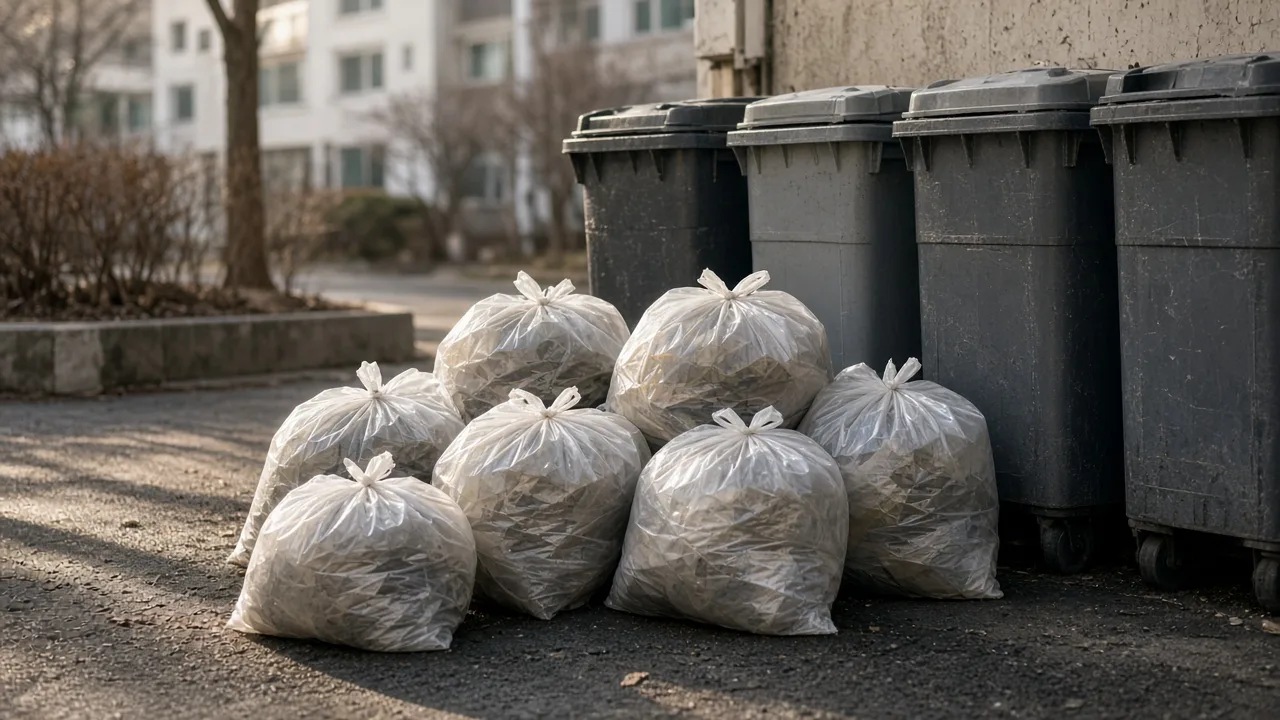
If you can drop a bag of household waste in a public bin for free, the designated bag is a tax only the honest pay. The Korea Herald reported that Seoul removed street bins because of illegal dumping linked to the volume-based system, and that some people dumped household trash into public bins to avoid buying regulation bags. The same article noted that some shop owners and residents did not want a bin installed near them.
Seoul’s own figures show how far the city went. The Seoul Metropolitan Government’s data, as reported by the Seoul Shinmun in November 2025, show street bins numbered 7,607 when the system began in 1995, fell to 3,707 in 2007 because of the illegal dumping dispute, and rose again to 6,940 in 2019 before dipping. The Korea Herald’s 2021 report put it another way: the city removed a total of 3,900 bins up to 2007.
So the trash can shortage in Seoul is the visible side effect of a policy that worked. The system was designed to cut waste and push people to separate recyclables, and a free bin was the obvious loophole.
What changed: takeaway cups, tourists and complaints
Several things pushed the city to reverse course:
- Takeaway coffee. In 2014 the Korea Herald reported that Seoul planned to add more than 1,000 bins in downtown areas because the growing number of coffee shops was producing a mass of cups, lids and cans.
- Foreign visitors. The same report said the new movable bins were meant to meet demand from visitors who pointed out the shortage in Myeong-dong and Insa-dong.
- Complaints. By 2021, the Korea Herald reported continuous complaints from residents and tourists, and the city had added more than 2,500 new public bins since 2007.
- The bus rule. Since 2018, passengers on city buses are not allowed to board with disposable cups, for safe driving, which raised demand for a bin near the bus stop, the Seoul Shinmun noted.
Travel advice written by visitors says the same thing. The Korea Herald quoted a Reddit user who spent three months in Seoul and found trash cans mostly in subway stations, and a 27-year-old Seoul resident who carried his rubbish in a backpack until he found one.
How many trash cans in Seoul are there now?
The city says it has been adding bins every year. According to the Seoul Metropolitan Government’s figures reported in November 2025:
| Year | Street trash bins in Seoul |
|---|---|
| 1995 | 7,607 |
| 2007 | 3,707 |
| 2019 | 6,940 |
| June 2023 | 4,656 |
| End of 2025 (planned) | 7,085 |
| 2026 (planned addition) | about 470 more |
The numbers are not a smooth line. They show that the count rose to 6,940 by 2019 and then fell again, which is why the bins were harder to find in 2023 than in 2019. Since then, the city has added bins every year for three years.
One district stands out: Gangnam-gu, home to the busy area around Gangnam Station, is the only one of the 25 districts operating more than 1,000 bins.
Where Seoul puts the bins, and where it does not
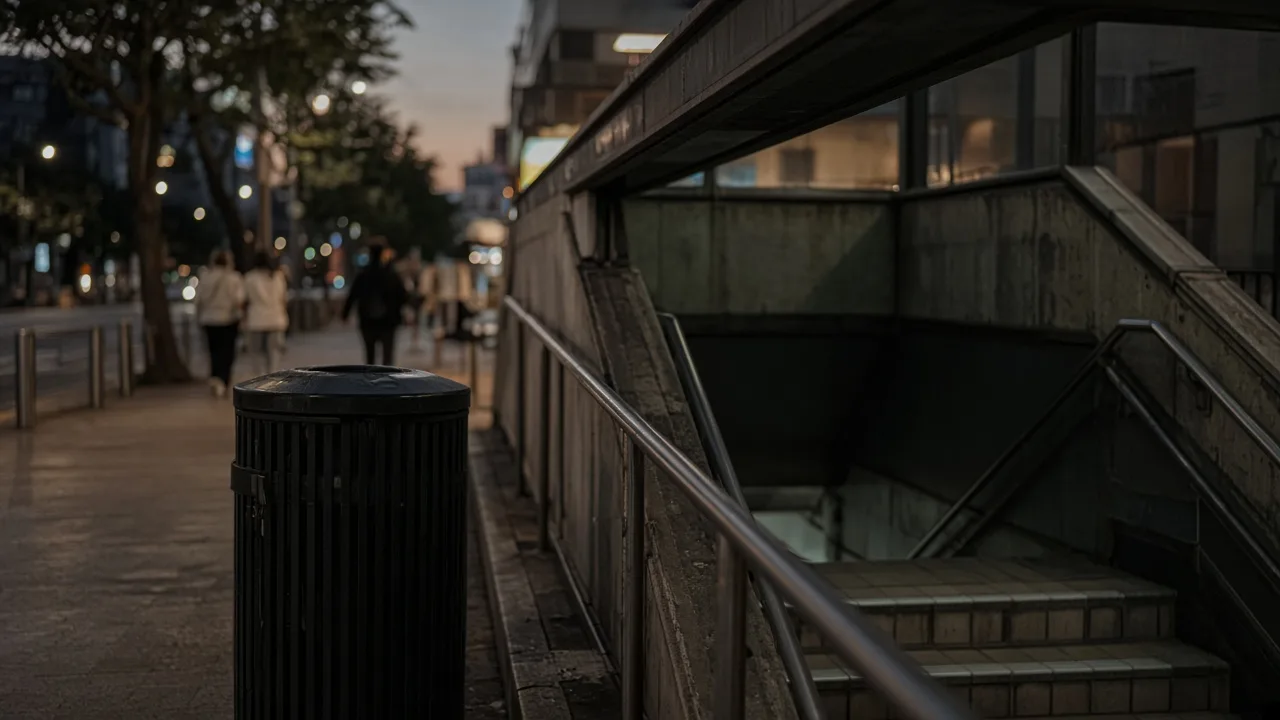
Seoul describes a clear rule for where new bins go. They are concentrated where many people pass, and kept away from ordinary housing.
- Installed: bus stops with heavy boarding, subway exits, tourist areas and other places with a history of illegal dumping.
- Not installed: ordinary residential streets, where household waste could be dumped, and places where a bin would block a pleasant walking route.
- Design: a new “Seoul-style” bin was unveiled in 2024 with a bright colour and an easy-to-use opening, and the city planned 246 of them by the end of 2025.
- Upkeep: district offices collect the rubbish, wash the outside of each bin once a day and make extra night collections in tourist areas. Street bin management is now part of the city’s urban cleanliness evaluation.
An environmental engineering professor quoted by the Korea Herald, Phae Jae-guen of the Seoul National University of Science & Technology, argued that districts should measure where litter piles up, and that places like Myeong-dong and Gangnam Station need more bins while quiet streets do not. He also suggested designing bins with smaller openings so that household rubbish does not fit.
How Seoul compares with other cities
The Korea Herald’s 2021 report said Seoul had fallen behind comparable cities abroad in bin availability. It noted that Singapore had installed trash cans every 30 metres, and that Paris and Berlin, both with fewer residents than Seoul, had more than 20,000 public bins each and still struggled with overflowing rubbish. The lesson is that more bins are not a complete answer in any city: collection, cleaning and public habits matter as much as the count.
What to do with your trash while you walk
Practical habits help more than hoping for a bin on the next corner.
- Carry a small bag. The Seoul resident quoted by the Korea Herald did the same with his backpack. A folded plastic bag in a pocket or backpack lets you keep wrappers and cups until you reach a bin.
- Look at the transit entrances. Bus stops and subway exits are where the new bins have been placed first, and stations are where visitors report finding them (see why Seoul’s public transportation is so good).
- Follow the labels when you do find one. Bins may be marked for particular kinds of waste, so read the sign before you drop anything in.
- Do not leave bags on the street or put household waste in a public bin. That is exactly the behaviour the volume-based system tries to prevent, and a bin full of household bags is a reason a neighbourhood loses its bin.
- Use the bin in your room before you head out. Accommodation has its own waste arrangements, so empty your pockets there. If you live in an apartment, the same bag system governs your waste at home (see why apartments are so popular in South Korea).
The bigger picture
Missing trash cans in Seoul look like neglect, but they are a trade. In 1995 the city chose to make households pay for what they throw away, and it accepted that a free bin on every corner would break that deal. The cost was convenience for people who walk with a coffee or a snack. Thirty years later, Seoul has changed the answer for the busiest places, with bins at bus stops, exits and tourist streets, while keeping them off quiet housing streets. If you are visiting, plan to carry a little rubbish for a few blocks. If you live here, your 490-won bag is the other half of the same system, and the reason the streets are cleaner than the bin count would suggest.
The same snacking habit is why convenience stores and delivery apps matter so much in Korean cities: you buy and eat in the same few blocks, and the wrapper stays with you (more in why food delivery is so convenient in South Korea).
FAQ
Why are there so few trash cans in Seoul?
Because Seoul removed many street bins after Korea introduced its volume-based garbage fee in 1995. Free public bins let people dump household waste without buying designated bags. Seoul has been adding bins back since 2007, mainly at bus stops, subway exits and tourist areas.
How many public trash cans does Seoul have?
According to Seoul Metropolitan Government figures, street bins numbered 4,656 in June 2023 and were planned to reach 7,085 by the end of 2025, with about 470 more in 2026. That compares with 7,607 in 1995.
Can tourists use public trash cans in Seoul?
Yes, for litter from walking around such as cups, wrappers and drink bottles. Household waste is not allowed, because it should go in designated, paid garbage bags. Look near bus stops, subway exits and tourist districts.
How much is a garbage bag in Seoul?
A standard 20-litre household bag costs 490 won in all 25 Seoul districts, according to the Seoul Metropolitan Government’s price information site.
Is it okay to throw away trash in a convenience store or café bin?
Do not assume so. A shop decides its own rules for its own bins, so ask first or carry your rubbish until you find a public bin.
Sources and further reading
- Seoul Shinmun, “More street trash bins make Seoul streets cleaner” (20 November 2025, Korean): go.seoul.co.kr
- The Korea Herald, “[Seoul Struggles 1] Quest for trash bin far from easy in Seoul” (2 March 2021): koreaherald.com
- The Korea Herald, “Seoul to reintroduce trash bins on streets” (1 August 2014): koreaherald.com
- Seoul Metropolitan Government price information, household garbage bag prices by district: sftc.seoul.go.kr
- Seoul Solution, “Recycling (Smart Waste Management in Seoul)”: seoulsolution.kr
- UNEP Korea Environmental Policy Bulletin, “Volume-Based Waste Fee System”: wedocs.unep.org