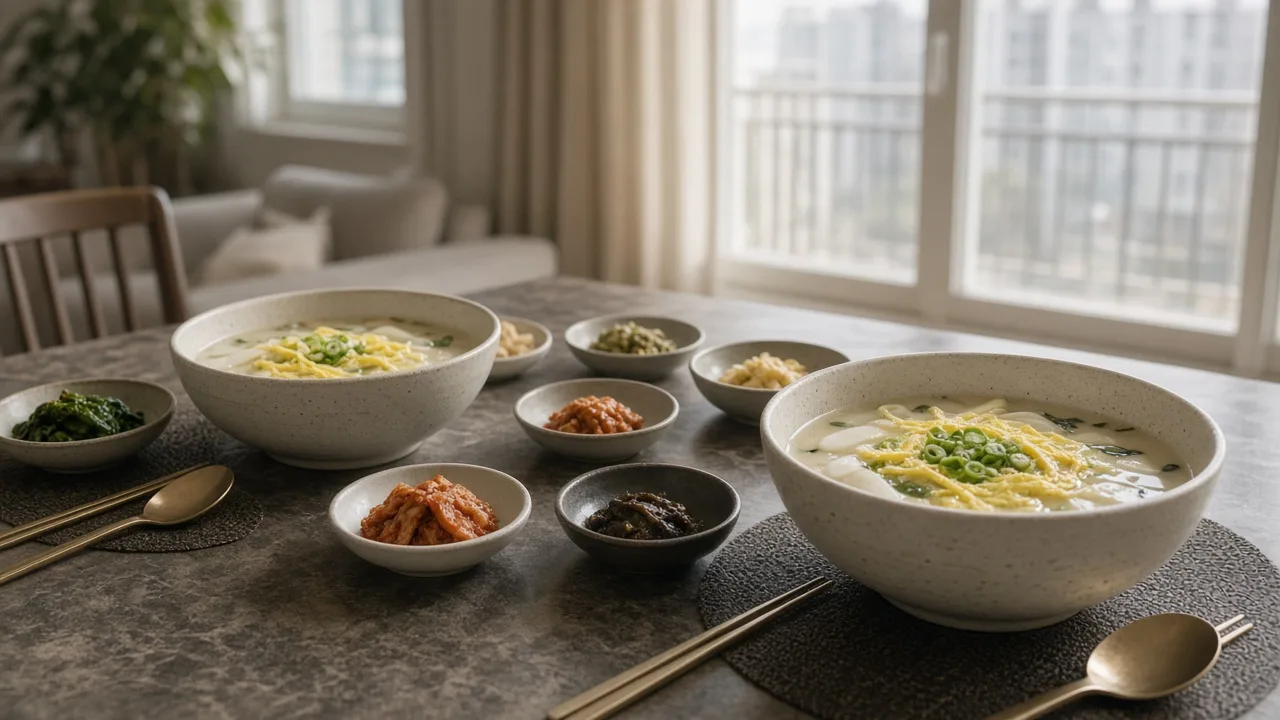
What is Seollal? Seollal (설날) is the Korean Lunar New Year, the first day of the first month of the lunisolar calendar, and with Chuseok it is one of the two big family holidays of the year. It is a three-day public holiday built around a trip to the family home, a memorial service for ancestors called charye, a formal bow to the elders called sebae, and a bowl of rice-cake soup called tteokguk (떡국). In 2027, Seollal falls on Sunday 7 February, and because that is a Sunday, a substitute holiday on Tuesday 9 February turns the break into four days, from Saturday 6 to Tuesday 9 February. This guide explains what Seollal is, why Koreans eat tteokguk, how the holiday works today, and why Korea ended up celebrating two New Years.
What is Seollal?
Seollal is the first day of the new year by the traditional lunisolar calendar, so its date moves between late January and mid-February on the Gregorian calendar. The Korea Tourism Organization describes it as a time to greet each other with blessings for the year ahead, hold ancestral memorial services, bow to elders and play traditional games. In December 2023, Korea’s Cultural Heritage Administration designated five traditional holidays, Seollal among them, as National Intangible Cultural Heritage, saying the holiday culture was established in the Three Kingdoms period and institutionalised in the Goryeo Dynasty.
The word to remember is not “party” but “gathering”. Seollal is less about fireworks and countdowns than about getting the family into one room, which is why the logistics of the holiday matter as much as the rituals.
Why do Koreans eat tteokguk on Seollal?
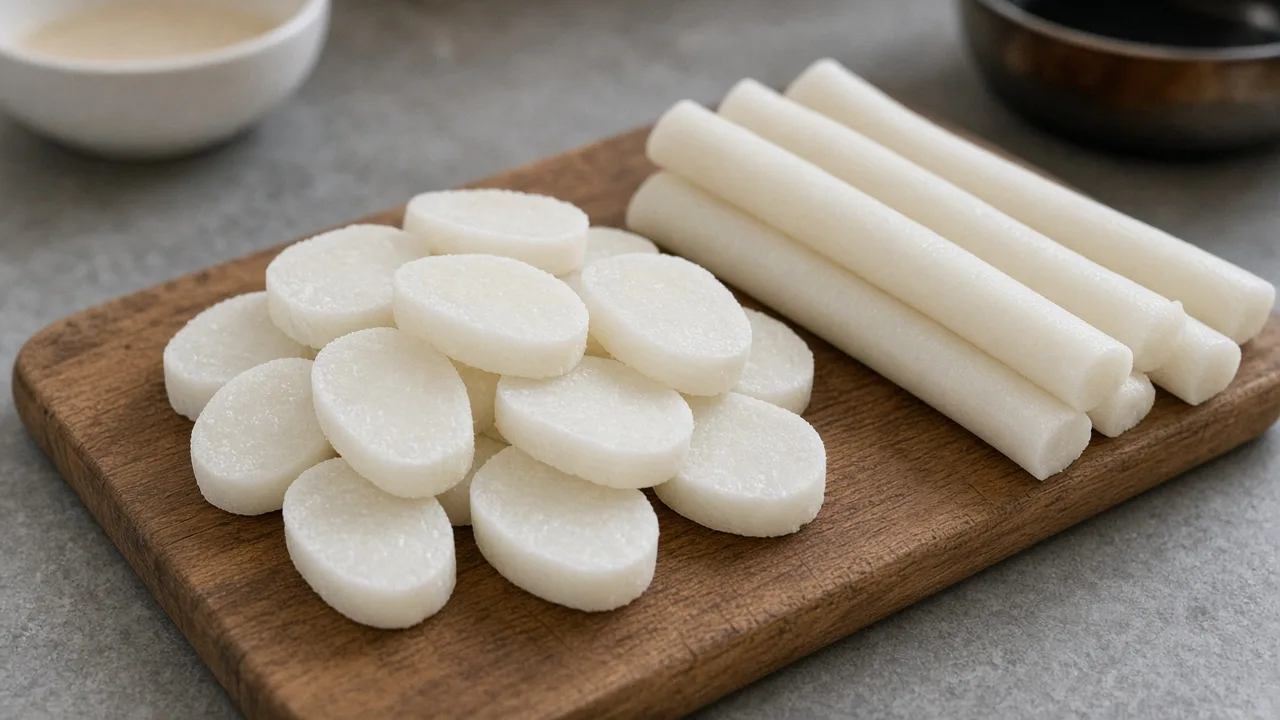
Tteokguk is a clear beef broth with thin oval slices of white rice cake, usually topped with shredded egg, green onion and beef. Every part of it carries a wish, and the same explanation appears in Korea.net’s recipe feature and in a BBC feature in which Dr Sook-ja Yoon of the Institute of Traditional Korean Food in Seoul explains the soup:
- The long rope of rice cake (garaetteok) stands for a long life.
- The coin-shaped slices recall the old Korean coin, the yeopjeon, and stand for wealth.
- The white colour stands for purity and a clean start. Korea.net quotes the historian Choe Nam-seon, who wrote that eating a white food to begin the year carries the meaning of rebirth.
The custom is old. Hong Seok-mo’s Dongguk Sesigi (1849), a book of annual customs, records people cooking rice soup with coin-shaped slices of rice cake at the new year. The BBC piece notes that the link between the soup and growing older is first recorded in that mid-nineteenth-century book, though Dr Yoon told the BBC she thinks the tradition is probably older. Regions have their own versions: Korea.net says people north of Seoul more often eat manduguk (dumpling soup) than tteokguk on Seollal, and Gaeseong is known for jogaengi tteokguk, with rice cake pieces shaped like small gourds.
The soup that makes you a year older
Koreans joke that you become a year older when you finish your bowl. Korea.net notes that some children ask for extra servings in the hope of growing up faster, and a common way to ask someone’s age is “How many bowls of tteokguk have you eaten?”
The joke sits on top of a real counting system. Under the traditional Korean age system, a baby was one at birth and everyone gained a year on 1 January, not on a birthday. Since June 2023 the law uses the international age instead, and the details are covered in how the Korean age system works after the 2023 reform. The tteokguk saying survives as a social habit: a Korean friend who says they “turned a year older” at New Year is usually speaking socially, not legally.
What happens during the holiday
A typical family Seollal has four parts, and most Korean families recognise all of them even if they skip some.
1. The trip home
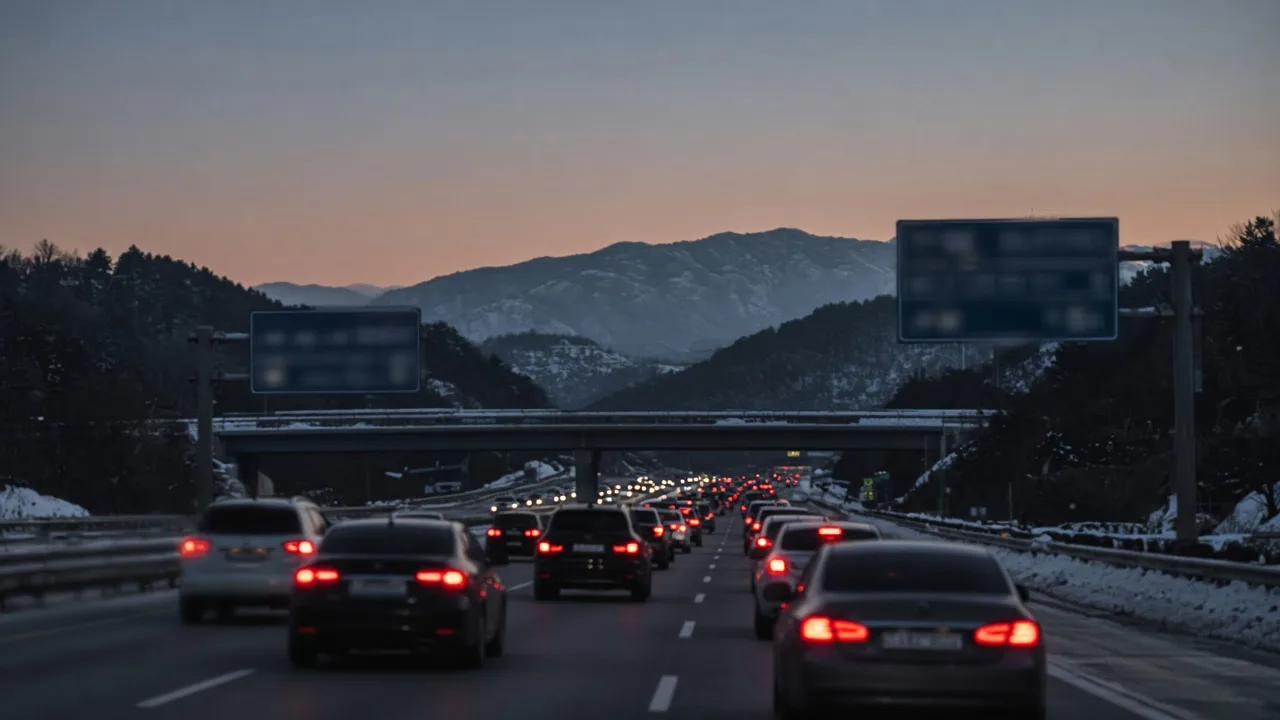
Millions of people leave the cities for hometowns in the same few days. For the 2026 holiday, the Ministry of Land, Infrastructure and Transport’s special traffic period ran from 13 to 18 February, and a provisional count of 29.14 million trips was reported by Data News, down from 32.07 million in 2025’s longer ten-day period. Because the 2026 break was shorter, the daily average actually rose, from 7.63 million to 8.74 million trips a day, and highway traffic rose from 4.6 million to 5.56 million vehicles a day. On the Gyeongbu Expressway between Seoul and Busan, the maximum travel time was 6 hours 50 minutes outbound and 9 hours 20 minutes on the way back.
That flow explains a great deal about the holiday. It is the annual proof of how concentrated Korea is in the capital region (see why South Korea is so concentrated in Seoul), because so many people have a hometown that is not where they live.
2. Charye, the memorial service
Charye is a memorial service for ancestors held on major traditional holidays. The National Folk Museum of Korea says it is generally performed for the last four generations of ancestors, and that dishes are seasonal: tteokguk at Seollal and songpyeon at Chuseok. The museum notes that charye was traditionally held at dawn but is now usually held later in the day because many relatives have to travel. How strictly a family follows it varies, so treat the museum’s description as the traditional form, not a rule every household keeps.
3. Sebae, the New Year bow
After the rite, family members bow to the elders. The Korea Tourism Organization describes sebae as a more formal bow than the everyday one: hands together in front of the body, kneel, bend forward and hold for about three seconds. The younger person says a blessing, usually “새해 복 많이 받으세요” (saehae bok mani badeuseyo), “I wish you many blessings in the new year”. Korea.net says that children who bow receive gift money, called sebaedon, in return. It is a cash gift in an envelope, a custom with its own etiquette, like the one described in why Koreans give money in an envelope at funerals.
4. The food and the games
Besides tteokguk, the Korea Tourism Organization lists two kinds of jeon (pan-fried savoury pancakes) as standard Seollal dishes: dongtae-jeon (pollack) and yugwonjeon (meatballs). People wear hanbok for the day, and the family plays yunnori, a stick-throwing board game for two or more players.
Why does Korea celebrate two New Years?
Once you know what Seollal is, you will notice that Koreans mark both 1 January and Seollal. The reason is political as well as cultural, and the Korea JoongAng Daily traced it in a December 2025 history.
- 1896: King Gojong adopted the Gregorian calendar and made 1 January the official start of the year. Many Koreans kept treating the first day of the lunisolar year as the real one.
- From the 1930s: colonial authorities banned ancestral rites during Seollal and prohibited making rice cakes and brewing alcohol around the holiday.
- 1949 onward: early governments left Seollal off the list of public holidays and pushed observance of 1 to 3 January instead. Under Park Chung Hee’s government in the 1960s, train service in and out of Seoul was reduced during the lunar holiday, according to the same article.
- 1985: a survey found that more than 80% of Koreans still celebrated by the traditional calendar, and the government made Seollal a single holiday under the name “Folk Customs Day”.
- February 1989: Seollal was restored as a three-day holiday, 93 years after it lost official status.
Today both are holidays, and they have different jobs. 1 January is the modern start of the year: the bell ringing at Bosingak Pavilion in Seoul and the first sunrise on a mountain. Seollal is the family holiday, with its travel, rites and food. That split is a useful mental model for a visitor: if a Korean friend is travelling, cooking and bowing, it is Seollal; if they are watching a countdown, it is 1 January.
What visitors should expect
For a traveller in Korea during Seollal, the practical effects are simple.
- Transport is crowded at the edges of the holiday. Intercity buses, KTX trains and expressways fill up before the first day and after the last. The Seoul to Busan figures above show how long a car trip can take.
- Many small businesses close for part of the holiday, while large shops and convenience stores usually keep some hours (more in why South Korea has so many convenience stores). Check opening times before you plan a meal.
- A greeting is welcome. Saying “새해 복 많이 받으세요” to a Korean acquaintance is a safe, warm thing to do in the days after the holiday starts.
- Offices and banks follow the public holiday. In 2027 that is Saturday 6 to Tuesday 9 February, so plan errands before or after.
The bigger picture
Seollal looks like a food holiday with a famous soup, but it is better understood as a system. A calendar that the state once tried to replace, a transport network that moves tens of millions of people in six days, a ritual that is shrinking in some households and lasting in others, and a bowl of white rice-cake soup that stands for a clean start. The tteokguk is the part everyone remembers. So what is Seollal, in one sentence? It is the day a dispersed country goes home, bows, eats a white soup and starts the year together.
FAQ
What is Seollal?
Seollal is the Korean Lunar New Year, the first day of the first lunar month. It is a three-day public holiday for family gatherings, ancestral memorial services (charye), bows to elders (sebae) and traditional food such as tteokguk.
When is Seollal in 2027?
Seollal is on Sunday 7 February 2027. The holiday runs from Saturday 6 to Monday 8 February, and a substitute holiday on Tuesday 9 February makes it four days in a row for most workers, according to the 2027 calendar published in June 2026.
Why do Koreans eat tteokguk on Seollal?
The white rice cake stands for purity and a fresh start, the long rope stands for long life and the coin-shaped slices stand for wealth. The custom is recorded in the 1849 book Dongguk Sesigi, and eating the soup is jokingly said to make you a year older.
Do Koreans celebrate 1 January or Seollal?
Both. 1 January is the official New Year’s Day and is marked with bell ringing and sunrise watching. Seollal is the longer holiday for family travel, rites and food. Seollal was restored as a three-day holiday in February 1989.
What is sebaedon?
Sebaedon is gift money given to children and younger family members after they perform the New Year bow (sebae) to their elders. It is usually handed over in an envelope.
Sources and further reading
- Korea Tourism Organization, “Celebrate the New Year with Korea’s Traditional Seollal Culture” (January 2025): english.visitkorea.or.kr
- Korea.net, “Korean recipes: Tteokguk rice cake soup” (2016): korea.net
- Korea.net, “5 major holidays designated Nat’l Intangible Cultural Heritage” (19 December 2023): korea.net
- National Folk Museum of Korea, “What is Charye?”: nfm.go.kr
- BBC Travel, “In South Korea, age is measured in bowls of soup” (20 February 2018): bbc.com
- Korea JoongAng Daily, “How Koreans came to celebrate the New Year twice” (31 December 2025): koreajoongangdaily.com
- Data News, 2026 Seollal travel statistics based on Ministry of Land, Infrastructure and Transport data (20 February 2026, Korean): datanews.co.kr
- Newsis, report on the Korea AeroSpace Administration’s 2027 calendar guide (29 June 2026, Korean): newsis.com