
붕어빵 (bungeoppang) is a crisp, fish-shaped pastry filled most often with sweet red-bean paste, baked in a hinged iron mould and sold hot from street stalls, and in South Korea it is a winter food because that is when the stalls appear: the pastry is cheap, eaten immediately with cold hands, and tied to the street life of the cold months rather than to any festival date. Its name joins 붕어 (bungeo, crucian carp) to 빵 (ppang, bread), although the snack contains no fish at all.
| Term | What it means |
|---|---|
| 붕어빵 bungeoppang | Fish-shaped pastry, usually filled with sweet red bean |
| 붕어 bungeo | Crucian carp, the fish the mould imitates |
| 팥 pat | Red (adzuki) beans; the paste is 단팥, sweetened red bean |
| 슈크림 syu-keurim | Custard cream, the other common filling (“choux cream”) |
| 노점 nojeom | A street stall, often seasonal and mobile |
| 붕세권 bungsegwon | Joking term for an area within reach of a bungeoppang stall, modelled on 역세권 (near a station) |
Where did a fish-shaped pastry come from?
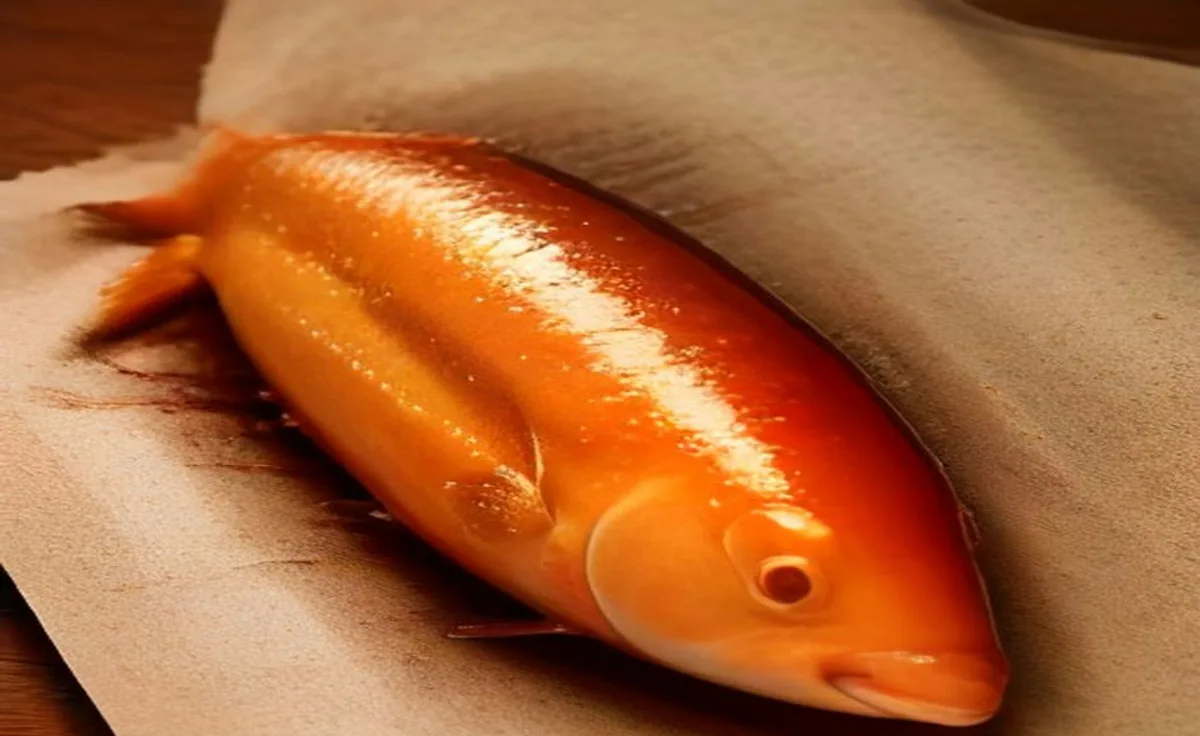
From a Japanese fish-shaped pastry, remade in Korea and then made cheaper and more Korean over time.
Bungeoppang is generally traced to the 1930s, during Japanese colonial rule, when Japan’s taiyaki, a sea-bream-shaped cake, was adapted in Korea with local moulds, including carp shapes. After the Korean War, flour supplied through United States aid made flour-based snacks easier to produce and buy, and the fish pastry spread as an inexpensive street food. The Korean version settled smaller and cheaper than its Japanese relative, sold by the handful from stalls rather than as a shop confection.
That history matters because bungeoppang was never a ceremonial food. It was an industrial-ingredients food: flour, sugar, red beans, a cast-iron mould and a gas flame, combined into something a vendor could sell very cheaply and a passer-by could eat in three minutes. Its tradition is the street corner, not the family table.
Why winter, specifically?
Because the stall economy and the eating experience are both winter-shaped.
The moulds are heavy, the flame is hot, and the pastry goes stale and soft quickly, so bungeoppang is best within minutes of baking. Vendors set up in the cold months, when a hot, sweet, hand-held snack is worth stopping for, and largely disappear in summer, when nobody wants to stand beside a gas mould or eat a hot pastry. Office workers buy it on the way home, students after 학원 (hagwon, private academies), and the word 붕세권 (a home in range of a stall, as if a pastry stand were a subway station) became a joke precisely because finding one became an event.
Winter also made the price possible. A seasonal vendor with a mould, batter and bean paste, selling a simple product for cash on a busy pavement, could keep the unit price extremely low. For decades the reference price in Korean memory was three or four fish for 1,000 won.
So why does one fish now cost 1,000 won?
Because every input rose, and the cheapest food shows inflation first.
By the 2025 to 26 winter, reporting by the Korea JoongAng Daily found many Seoul vendors selling bungeoppang at 1,000 to 1,500 won apiece, where three for 2,000 won, or two for 1,000 won, had recently been standard. The Asia Business Daily, in November 2025, found two for 1,500 to 2,000 won. The driver named by vendors and by the Korea Agro-Fisheries & Food Trade Corporation (aT) data behind both reports is the filling: domestic red beans reached about 13,868 to 13,893 won per 500 grams at retail in late October to early November 2025, up roughly a third year on year, with flour and sugar also well above their levels of five years earlier and LPG for the moulds more expensive too.
A snack whose entire identity is “almost free” cannot absorb that. There is no smaller luxury version of a bungeoppang that still feels like bungeoppang, so the price rise reads to Koreans as a small, legible index of food inflation, which is why Korean media now half-jokingly call it 붕플레이션, bungeoppang plus inflation.
Is the street stall itself disappearing?
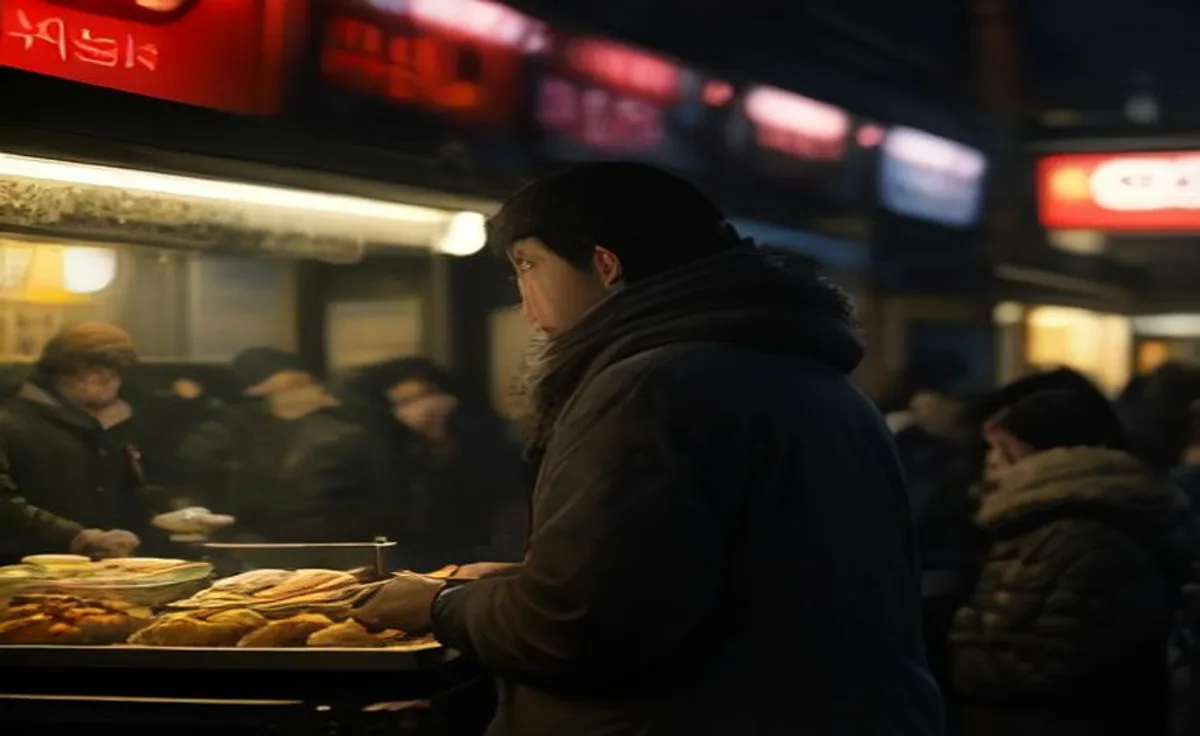
Partly, and price is only one of the reasons.
The Seoul Metropolitan Government figures cited by the Asia Business Daily put street stalls in Seoul at 4,741 last year, down 22 percent from 6,079 in 2020. Vendors interviewed in the same reporting pointed to crackdowns and civil complaints alongside ingredient costs, and a citizen-made bungeoppang map app now documents scarcity as much as abundance: users ask online where any stall can still be found.
The gap is being filled, but by different sellers. Convenience-store chains have expanded packaged and mini bungeoppang, cafes sell it as a seasonal menu item, and frozen home-meal versions report growing sales (Ottogi’s frozen bungeoppang passed 4 billion won in sales from October 2024 to February 2025, according to the Seoul Economic Daily). The flavour survives. The stall (cash, steam, a paper bag, a mould opened with a flick) is the part under pressure.
The stall, its costs, and the frozen alternative
What the stall version gives. Immediacy and price: a hot pastry eaten on the pavement within minutes, made in front of you, at a price a schoolchild could pay. It also gives winter streets a smell and a stopping point, and gives older, low-capital vendors a seasonal income.
What it costs. A legally exposed living. Many stalls operate in a grey zone of pavement use, so income depends on tolerance, weather and complaints, with no security from one winter to the next. For customers, the trade-off has arrived as price: the snack now asks for a small decision where it once asked for none.
The honest middle. Packaged and frozen bungeoppang solve availability and hygiene, and they are why younger Koreans may know the taste better than the stall. What they do not reproduce is the reason the food became a winter symbol in the first place.
What is changing now?
Bungeoppang is moving indoors and online. Convenience stores and frozen brands are making it a year-round, anywhere product, social media maps seasonal stalls like rare sightings, and each autumn’s first price sightings now function as an informal inflation report in Korean news. The pastry that began as a colonial-era adaptation and a post-war cheap snack is becoming, slowly, a branded winter dessert.
If you are visiting Korea in winter, the practical advice is unchanged: buy it from a stall with a queue, eat the tail or the head first according to your own allegiance, and eat it immediately. A bungeoppang carried for twenty minutes is a different, lesser food.
FAQ
Does bungeoppang contain fish?
No. It is a fish-shaped pastry, named for the crucian carp (붕어). The standard fillings are sweet red-bean paste and custard; some stalls offer other fillings.
How much does bungeoppang cost in Korea?
In the 2025 to 26 winter, commonly 1,000 to 1,500 won per piece in major Seoul areas, or 1,500 to 2,000 won for two, up from three for 2,000 won in recent years. Prices vary by district.
Why is bungeoppang only sold in winter?
Because it is baked on hot moulds and eaten immediately, and because seasonal street stalls appear in the cold months. Packaged and frozen versions are now sold year-round.
What is the difference between bungeoppang and taiyaki?
Bungeoppang descends from Japanese taiyaki, adapted in Korea in the 1930s. The Korean version is typically smaller, cheaper and sold as a street snack, with carp rather than sea-bream moulds common.
What does bungsegwon mean?
붕세권 is a joking term, modelled on the real-estate word for “near a subway station,” for living within reach of a bungeoppang stall, a joke about how hard stalls are to find.
How rising costs are squeezing a winter snack
Bungeoppang is a winter food because a hot, perishable, almost-free snack needs cold streets, seasonal stalls and hungry passers-by, and for decades flour, beans and pavement space were cheap enough to supply all three. What is squeezing it now is the same arithmetic from the other side: red beans up by roughly a third in a year, flour and fuel elevated, stalls in Seoul down by a fifth in four years. The fish has not changed. The economics that let it cost almost nothing have.
Related reading: Why Are Side Hustles Popular in South Korea? Why Is South Korea So Concentrated in Seoul? Why Are Mountains in South Korea So Accessible?
Sources and further reading
- Korea JoongAng Daily: ‘Doesn’t feel like a snack for ordinary people anymore’: bungeoppang at 1,000-1,500 won a piece, red beans 13,868 won per 500g (October 2025)
- The Asia Business Daily: ‘Could This Be the End?’: Seoul street stalls down 22 percent from 6,079 (2020) to 4,741, two bungeoppang for 1,500-2,000 won (November 2025)
- Seoul Economic Daily: Koreans turn to DIY winter snacks: frozen bungeoppang sales and 1,000-1,500 won street prices (December 2025 reporting)
- Korea.net (Ministry of Culture, Sports and Tourism): bungeoppang as a Korean winter snack