
A 돌잔치 (doljanchi, first birthday feast) is a formal celebration held when a Korean baby turns one, with a ceremonial table of symbolic objects, traditional dress, extended family and often a rented hall. Its origin is blunt: Korean infant mortality was high enough that surviving to the first birthday was a genuine achievement worth a public feast. Mortality has collapsed from about 114 deaths per 1,000 births in the late 1950s to 2.3 in 2024. The risk is gone and the party has grown.
| Element | What it is |
|---|---|
| 백일 baegil | The 100th day, the earlier survival milestone |
| 돌 dol | The first birthday itself |
| 돌상 dolsang | A ceremonial table of symbolic objects and food |
| 돌잡이 doljabi | The baby picks an object, read as a sign of its future |
| 돌반지 doljanji | Gold rings given as gifts |
What is the origin of the first birthday celebration?
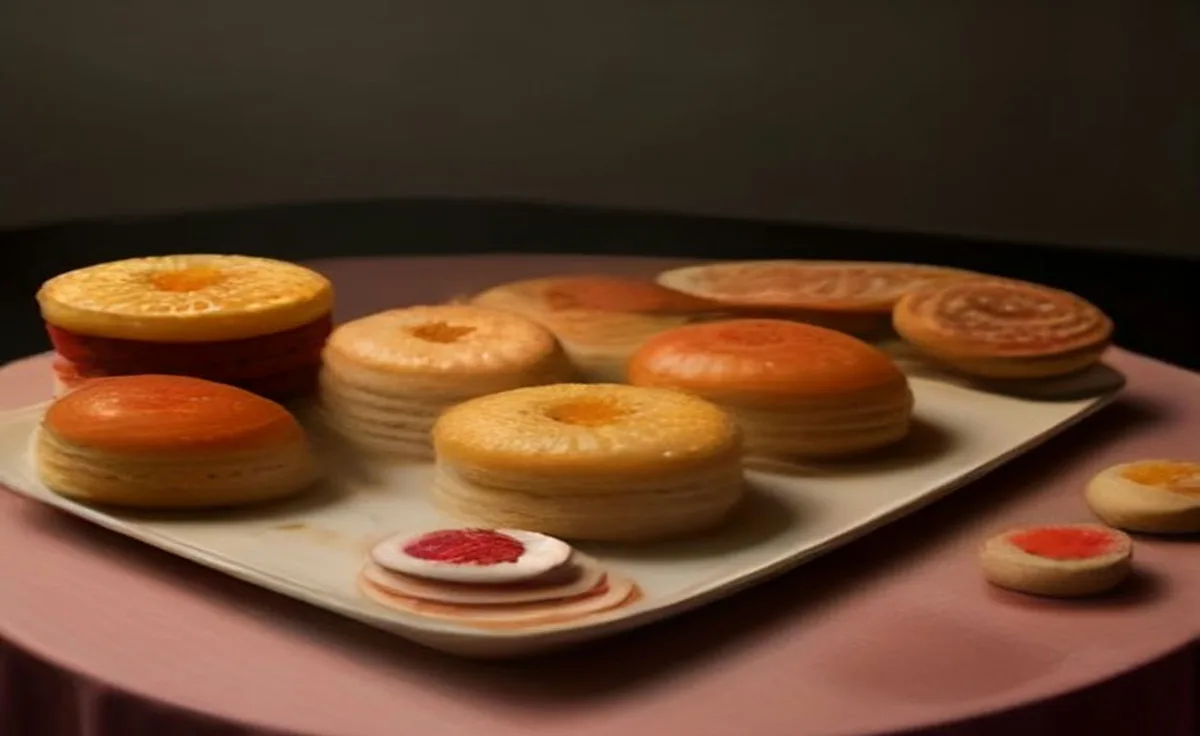
Surviving infancy. Korean folk practice built two formal milestones into a baby’s first year because both represented clearing a real threshold of danger.
백일, the hundredth day, came first: the point at which a newborn was considered to have passed the most acute period of risk, marked by a celebration with relatives and neighbours. 돌, the first birthday, was the larger milestone, and the practice is documented from the early Joseon period. Korea’s National Institute of Korean History describes the first birthday and the setting of the ceremonial table as an established ritual form, and the 돌잔치 appears in 평생도, the genre of paintings depicting the stages of a life, as one of the canonical scenes of a Korean lifetime.
The ritual’s content reflects its purpose. The feast is not primarily a birthday in the modern sense of celebrating a person. It is a declaration that the child has lived, combined with petitions for longevity and prosperity.
How much risk was there, actually?
Enough to make the ritual rational rather than sentimental, and Korean demographic figures show the scale.
Infant mortality in Korea stood at roughly 114.4 deaths per 1,000 live births in the period 1955 to 1960, around 95.7 per 1,000 in 1960, falling to about 89.7 in 1960 to 1965, 64.2 in 1965 to 1970 and 38.1 in 1970 to 1975. In 2024 the rate was 2.3 per 1,000.
Read the first figure concretely: more than one baby in nine did not reach its first birthday. In that environment, a family that held a public feast at twelve months was announcing a real and uncertain outcome. The modern equivalent of the emotion is not a birthday party. It is relief.
Korea’s current rate is among the lowest in the world, below the OECD average, which is one of the clearest measures of what Korean development achieved in two generations.
What is on the dolsang table, and what is doljabi?
The 돌상 is set with objects, each carrying a meaning, and food. Traditional arrangements include rice, a white skein of thread, a book, paper, a writing brush, and a bow and arrow for a boy or scissors, a needle and a ruler for a girl, laid out on cotton cloth.
Then comes 돌잡이. The baby is seated at the table and allowed to grasp whatever it chooses, and the choice is read as an indication of the child’s future:
- Thread or rice: long life and material sufficiency
- Book or brush: scholarship and office
- Bow and arrow: martial ability
- Needle, scissors, ruler: skill with the hands
Modern tables update the objects, and this is where the ritual’s adaptation is most visible. A stethoscope stands for medicine, a gavel or law book for a judge or lawyer, a microphone for entertainment, a computer mouse or a football for the obvious. The practice of divining the future from the grasp survived; the professions on offer changed.
Gift conventions also carry the original meaning. 돌반지, small gold rings, were traditionally given, which functioned as portable household savings for the child: a gift that was simultaneously ceremonial and a store of value. As gold prices rose, many families shifted to cash or to a single smaller ring.
If babies no longer die, why is the party bigger?
Because its function changed, and the new function has no natural ceiling.
A ritual that commemorates survival has a built-in limit on display: the point is the child’s existence, and the audience is the people who worried. A ritual that has become a family’s public occasion is subject to the same pressures as a wedding. So the modern 돌잔치 moved into hotel banquet rooms and dedicated party venues, acquired professional photography, themed decoration, rented 한복, catering, and in many cases a hired host.
This matters for a specific reason: the Korean family’s calendar of obligatory public events is where a great deal of household money goes, and the first birthday was absorbed into that calendar. The cost is borne by households at the point where their income has just dropped and they have already paid for the postpartum care centre.
There is a visible counter-movement. Many Korean couples now hold a 셀프 돌잔치, a small home celebration with just the grandparents and a photo session, or skip the feast and do only a studio shoot. The commercial version is not retreating, but it is no longer the only respectable option, and in a country with the world’s lowest birth rate the economics of the obligation are being questioned openly.
What should a guest do?
If you are invited as a foreign guest, the expectations are straightforward.
Bring money or gold. Cash in a clean envelope is entirely normal and expected. Gold rings or a small gold item are traditional. Amounts track closeness: a colleague gives less than a close friend, who gives less than family. Ask a Korean colleague what is appropriate rather than guessing, because the figure is conventional and getting it badly wrong is noticeable.
Dress as you would for a small wedding. Venue events are semi-formal.
Expect a programme. There will usually be a host, a video of the baby’s first year, the 돌잡이 moment, speeches and a meal. The 돌잡이 is the part to watch and photograph.
Do not comment on the baby’s weight or appearance negatively, even jokingly. Traditional reticence about praising a baby’s health too directly has largely faded, but negative remarks land badly.
What are the trade-offs?
What the ritual does well. It marks something real: a family’s first year with a child, survived. It gathers the extended family around the youngest member, gives grandparents a formal role, and produces a record the child will later see. The 돌잡이 is genuinely charming, and the gold-ring convention quietly taught generations of Korean families to start saving for a child on day 365.
What it costs. It has become another formal expense in a sequence of them, at the worst possible moment in a household’s cash flow, driven by venue pricing and social comparison rather than by the meaning of the occasion. Guests bear a share through the gift convention, which is its own recurring obligation across a Korean adult’s social network.
And the honest irony. The celebration grew most elaborate exactly as the thing it celebrates became certain. A country that reduced infant mortality from one in nine to one in four hundred and thirty now spends more on marking the achievement than it did when the achievement was in doubt. That is not hypocrisy. It is what happens when a ritual outlives its risk and gets repurposed as a stage.
FAQ
What does doljanchi mean?
돌 is the first birthday and 잔치 is a feast, so 돌잔치 is the first birthday feast, held when a baby completes its first year.
What is the difference between baegil and dol?
백일 is the hundredth day after birth, the earlier survival milestone, usually marked smaller and at home. 돌 is the first birthday and the larger formal celebration.
What is doljabi?
The moment when the baby chooses an object from the ceremonial table. Each object carries a meaning and the choice is treated as an indication of the child’s future.
What should I give as a gift at a Korean first birthday?
Cash in an envelope or a small gold item. Gold rings are the traditional gift. Amounts follow convention based on your closeness to the family, so ask a Korean friend what is appropriate.
Do Koreans still hold big first birthday parties?
Many do, in hired venues with professional photography, but small home celebrations and studio-photo-only approaches are increasingly common and socially accepted.
The structural answer
The first birthday feast exists because Korean babies used to die. At a rate above one in nine, reaching twelve months was a result, and a family marked it publicly because the outcome had been genuinely uncertain. Korea then achieved one of the fastest declines in infant mortality in recorded history, down to 2.3 per thousand, and the feast did not shrink to match. It expanded, because by the time the risk vanished the occasion had become something else: a family’s formal appearance, with a venue, a photographer and a guest list. The objects on the table still ask what the child will become. Nobody at the table is still asking whether.
Related reading: Why Are Some Young South Koreans Delaying or Opting Out of Marriage? Why Are Hagwons So Popular in South Korea? Why Are Apartments So Popular in South Korea?
Sources and further reading
- National Institute of Korean History: the first birthday and the setting of the ceremonial table
- Newsquest: the first birthday feast in Korean lifetime paintings
- Government of Korea briefing: 2024 provisional birth and death statistics
- Korea Health Promotion Institute: infant mortality rate indicator
- Datasom: Korean child mortality among the lowest in the world
- Baby News: falling births alongside a year-on-year rise in the infant mortality rate