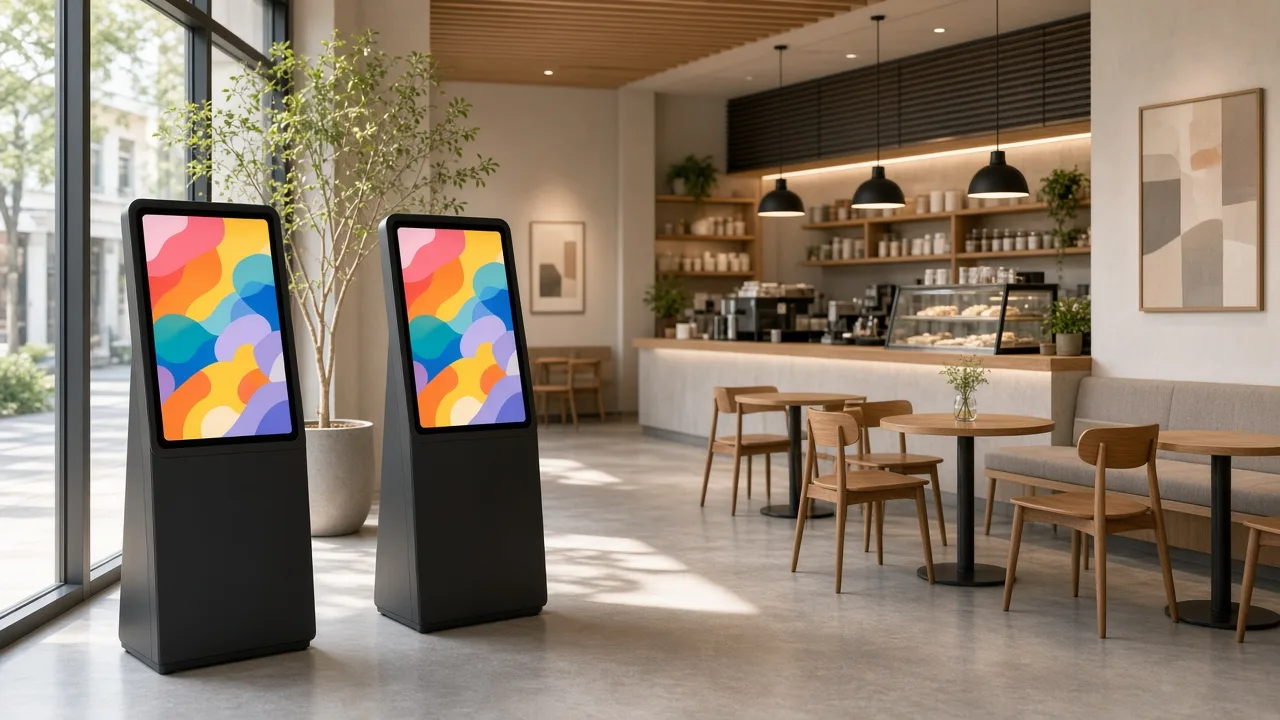
Self-service kiosks look everywhere in Korea because they have spread fastest in the places most visitors go: coffee shops, burger and sandwich chains and busy franchise outlets. Official data show a more mixed picture. In 2024 only 12.9% of Korean food-service businesses used any automatic ordering system, and among independent restaurants the rate was far lower. Rising labor costs, a shortage of workers and a taste for contactless service all pushed owners toward kiosks. Older and disabled customers are the ones who find them hardest. This guide uses survey data to separate the impression from the numbers.
How common are self-service kiosks in Korea?
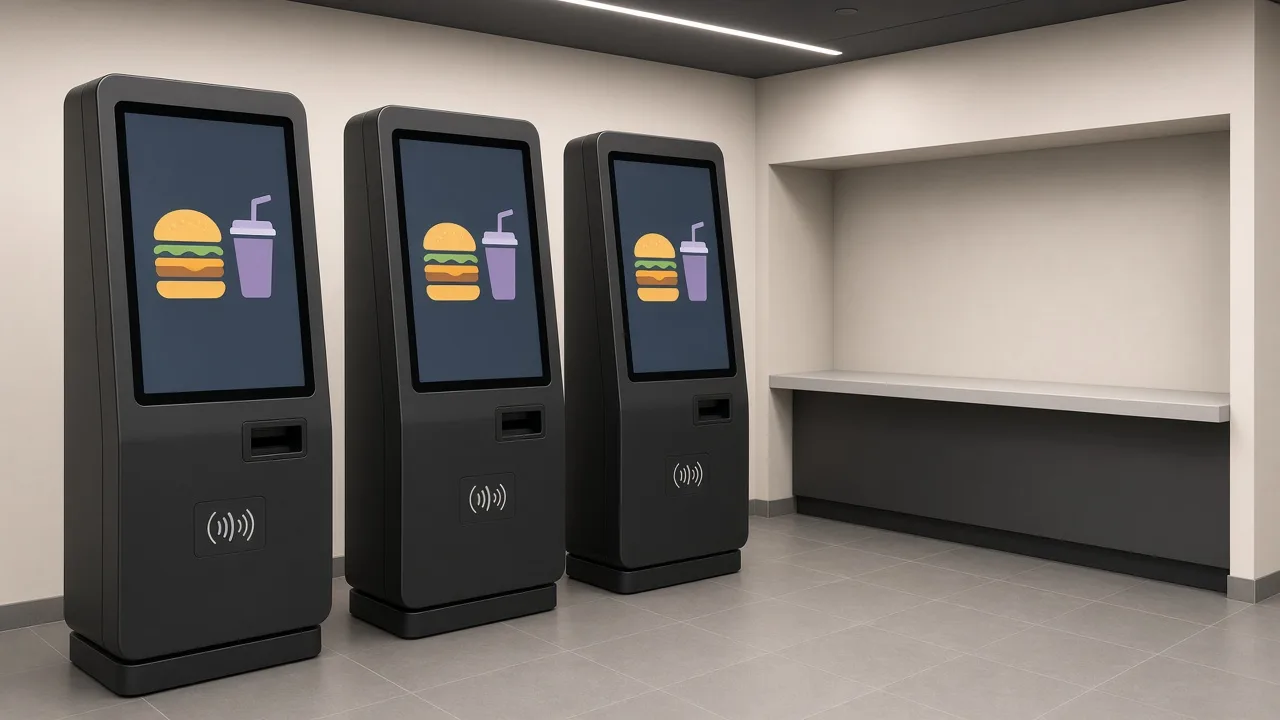
The best national figure comes from the Korea Rural Economic Institute’s 2024 survey of food-service businesses, reported by Asia Economy and the Korea Times:
- 12.9% of food-service businesses used automatic ordering systems in 2024, up from 1.5% in 2019 and 0.6% in 2017, and from 7.8% in 2023. It passed 10% for the first time in 2024.
- Cafes and fast food lead. Coffee and other non-alcoholic beverage shops had the highest share at 30.2%, followed by burger, sandwich and similar shops at 27.9%.
- Korean restaurants lag. The share was 18.3% among Japanese restaurants but 7.7% among Korean restaurants. Bars were lowest at 2.9%.
- Independents lag. Non-franchise general restaurants stood at 7.3%, according to the Ministry of Agriculture’s survey as quoted by ETNews.
- “Kiosk” covers three things. Of the automatic ordering systems in use, 54.8% were kiosks, 35.8% were customers’ own phones and 9.2% were tablets. A year earlier kiosks had been 67.0% and phones 28.3%.
So a typical foreigner’s experience of kiosks, which happens at chains and cafes, is real, but it reflects a particular slice of the market. An ordinary neighborhood restaurant is still more likely to have a person taking the order.
Why owners install them
Several pressures explain the push:
- Labor costs. Korea’s minimum wage was 10,030 won an hour in 2025 and rose to 10,320 won for 2026, an increase of 2.9%, according to the Ministry of Employment and Labor. In the same survey, 77.5% of food-service owners named rising labor costs as a major difficulty.
- Hard-to-fill jobs. The survey found that 60.2% of owners had trouble hiring hall-service and counter staff, and 54.2% had trouble hiring kitchen workers.
- Contactless habits. The Korea Times noted that kiosk use grew with efforts to cut labor costs and a consumer shift toward contactless service.
- The up-front bill. An owner interviewed by ETNews said that installation alone cost several million won, and that some places that installed kiosks later took them out. This is one owner’s account, not a survey result.
These pressures also show up in the delivery market: the same survey found that 31.7% of businesses took orders through delivery apps in 2024, the first time above 30%. For that side of the story, see why food delivery is so convenient in South Korea.
Who finds them hard to use
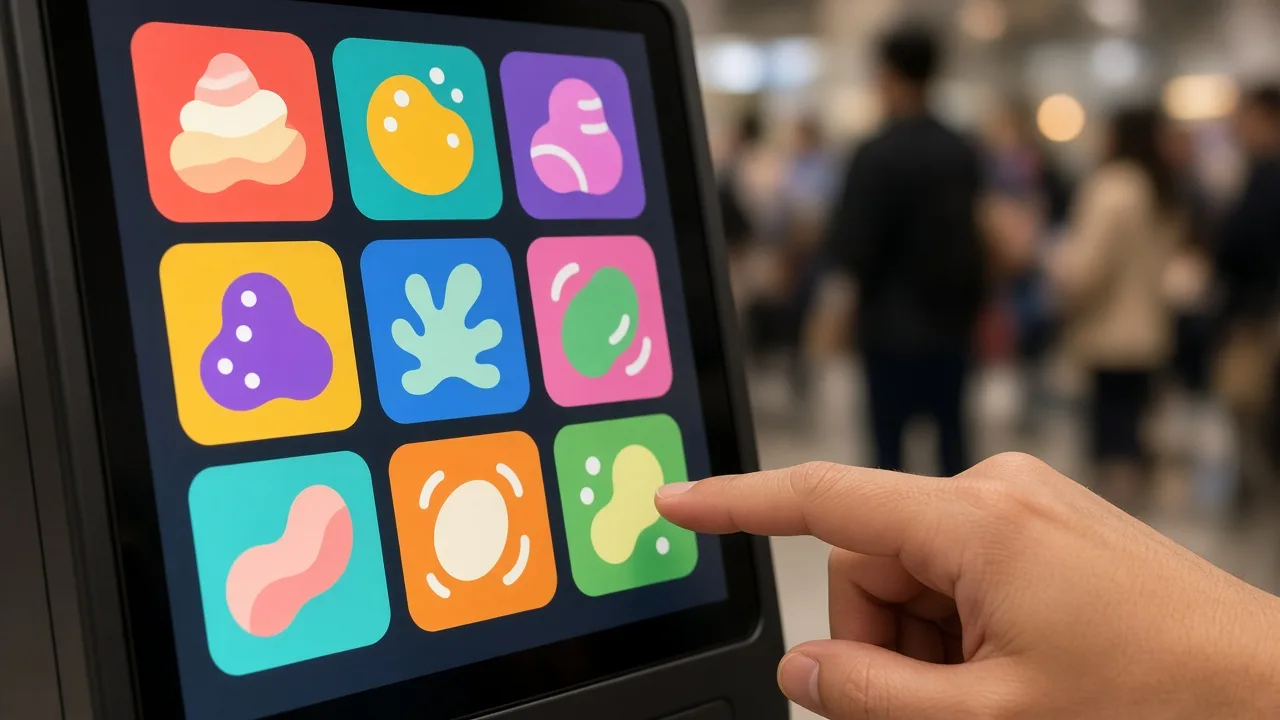
Kiosks transfer work from staff to customers, and some customers do not manage it. The Seoul Digital Foundation’s 2023 survey of 5,500 Seoul residents aged 19 and over, reported by Yonhap, found that 81.7% had used a kiosk, up from 76.9% in 2021. The figures by age were:
| Age group | Had used a kiosk |
|---|---|
| 55 to 64 | 79.1% |
| 65 to 74 | 50.4% |
| 75 and over | 19.1% |
| All aged 55 and over | 57.1% |
Among older users, 59.6% said they had run into difficulty. Their reasons were:
- Feeling pressure from the people queuing behind them (53.6%)
- Difficulty applying the options (46.3%)
- Hard terms or vocabulary (34.0%)
The foundation said the findings suggest a hidden extra cost for people who cannot use mobile apps, since they have to use offline services and may pay more time and money. Seoul planned to expand digital support centers and a one-to-one peer education program for older residents.
For people with disabilities the problem is sharper. A 2025 survey by the Ministry of Health and Welfare of 4,114 public and medical institutions and 540 people with disabilities, reported by the Korea Times, found that 161 respondents had trouble with kiosks. Of those, 80.1% said automatic ordering machines were the hardest type to use, and 54% complained of feeling rushed by the people behind them. Of 277 who had used kiosks, 44.8% preferred to be served by a staff member. The National Information Society Agency counted only 466 kiosks nationwide certified as fully barrier-free.
The accessibility rule and what it costs
Korea’s disability discrimination law has been revised several times since 2007. A 2021 amendment required reasonable accommodations in kiosk design and operation, and, according to the Korea Times, from January 2026 the rule applies to kiosks already installed as well as new ones. ETNews reported that the barrier-free kiosks required can cost up to three times as much as a standard one, and can bring extra construction costs and penalties for ending existing contracts, so some small owners have stopped using kiosks or given up on buying them.
It added that the Ministry of SMEs and Startups had cut its subsidy rate for kiosks and table-order devices from 70% to 50% in 2024, and that the budget for the program fell from 34.4 billion won in 2024 to 32.5 billion won in 2025, on the government’s view that kiosk adoption had reached a reasonable level. The government was reported to be considering support for kiosk rental fees and subsidies of up to 100% for vulnerable groups.
What disabled users say would help
The Ministry of Health and Welfare survey also asked what would make kiosks usable, and the answers are practical rather than technical. Respondents with disabilities suggested assigning staff, installing call bells, creating dedicated kiosk areas for people who are not used to them, and running public awareness campaigns. Their preference for human service was strongest among some groups: the Korea Times reported that more than 70% of the visually impaired respondents preferred to order directly from staff, and preference for staff was also high among people with severe disabilities and wheelchair users. Among all disabled respondents who had used kiosks, the preference for staff, at 44.8%, was more than double the share who preferred a kiosk. The complaints went beyond feeling rushed, which 54% reported, to struggling to find buttons or navigate menus.
The survey also measured how well the rules are known. Of the 4,114 institutions surveyed, 78.7% said they knew about the anti-discrimination requirement in the revised disability law, but only 51.1% of the people with disabilities knew about it, a gap of nearly 28 percentage points. After the survey, the ministry said it would draw up measures to strengthen the kiosk rules and issue guidelines on information accessibility for people with disabilities.
That leaves a policy puzzle that ETNews described. The government judged that kiosk adoption among small businesses had reached a reasonable level and cut the support budget in 2025, yet the Ministry of Agriculture’s own survey found adoption of only 12.9% overall and 7.3% for non-franchise general restaurants. Trade groups quoted by the paper said the budget should be raised and that the policy should be based on what owners actually experience on site, not on a headline adoption rate. In other words, the machines that look universal to a visitor are, for the owners who have to buy and maintain them, still an expensive decision with a rising list of obligations.
How to use a Korean kiosk as a visitor
- Look for the language button. Many chain kiosks offer an English menu, though this varies by shop, so check the screen.
- Do not feel rushed. Many Koreans themselves say they feel pressure from the line behind them, according to the Seoul survey. Staff are usually willing to help if you ask.
- Expect a phone or table option. In some places, you scan a QR code and order on your own phone. The survey found 35.8% of automatic ordering systems were customers’ phones.
- At a Korean restaurant, expect a person. Only 7.7% of Korean restaurants used any automatic ordering in 2024.
- Remember the human side. Behind the kiosk is often a small business under cost pressure; see why retired Koreans open chicken shops and cafes for how many of those owners got there, and why South Korea has so many convenience stores for another place where automation and long opening hours meet.
Quick answers
Why are there so many kiosks in Korea?
Owners face high labor costs and hiring difficulties, customers have grown used to contactless ordering, and kiosks are most common in cafes and chains. In 2024, 12.9% of food-service businesses used automatic ordering, up from 1.5% in 2019.
What share of Korean restaurants use kiosks?
The Korea Rural Economic Institute found 12.9% of food-service businesses used automatic ordering in 2024, including kiosks, customer phones and tablets. Among independent general restaurants it was 7.3%, and among Korean restaurants 7.7%.
Which businesses use kiosks the most in Korea?
Coffee and drink shops (30.2%) and burger and sandwich shops (27.9%) had the highest shares in the 2024 survey.
Are kiosks hard for older people in Korea?
Many find them hard. A Seoul survey found that only 19.1% of people aged 75 and over had used one, and 59.6% of older users reported difficulties, most often because they felt pressure from the line behind them.
Are Korean kiosks accessible to people with disabilities?
Often not. A government survey found that automatic ordering machines were the hardest equipment to use, and only 466 kiosks nationwide were certified as fully barrier-free. A rule on accessible kiosks is extended to existing kiosks from January 2026.
Sources and background
- Asia Economy, “‘300,000 won a month’ delivery app fees: 1 in 10 restaurants adopt this” (26 April 2025, Korean; reporting the Korea Rural Economic Institute’s 2024 food-service survey): asiae.co.kr
- ETNews, “‘We were told kiosks were widespread, but it is only 13%'” (4 July 2025, Korean): etnews.com
- The Korea Times, “Disabled in Korea struggle to use kiosks as new Accessibility Law looms” (9 August 2025): koreatimes.co.kr
- Yonhap News, “Older people’s kiosk use is up, but mobile app use is still low” (12 June 2024, Korean; reporting the Seoul Digital Foundation’s 2023 survey): yna.co.kr
- Ministry of Employment and Labor, 2026 minimum wage decision: moel.go.kr