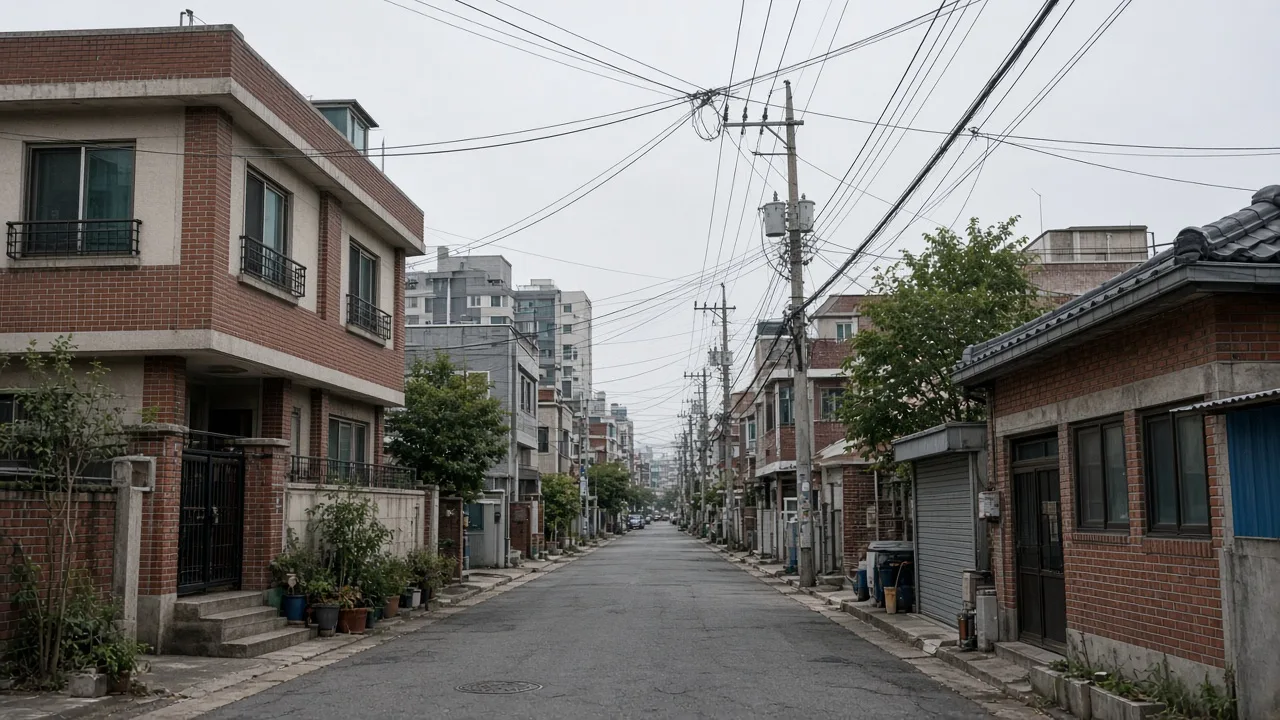
A Korean address is written from the largest unit to the smallest: city, district, road name, building number, then the apartment building and unit. Since 1 January 2014 the official format is the road name address (도로명주소, doro-myeong juso), which replaced the old lot-number address (지번주소, jibeon juso) as the legal address. If you can read the road name, the building number and the “dong” and “ho” of an apartment, you can read almost any Korean address. This guide shows how to read one, why the system was changed, how building numbers are assigned and which old habits are still alive.
How to read a Korean address, step by step
Here is an invented example, written in the official order: Seoul, Gangnam-gu, Teheran-ro 123, 101-dong 202-ho (Yeoksam-dong, Sample Apartments).
| Part | Meaning |
|---|---|
| Seoul | The city or province (시·도) |
| Gangnam-gu | The district (구, or 시·군) |
| Teheran-ro | The road name |
| 123 | The building number on that road |
| 101-dong | Apartment building number inside the complex |
| 202-ho | The unit, in this case second floor, unit 2 |
| (Yeoksam-dong, Sample Apartments) | A reference item in brackets: the neighborhood and the complex name |
The Ministry of the Interior’s guidance, as reported by the Korea Policy Briefing site, says a road name address is the city or province, the district, the road name and the building number, followed by a detailed address of building, floor and unit where there is one. The road name is written without spaces, a comma separates the building number from the detailed address, and the building name is not placed between them. The bracketed reference item can carry the legal neighborhood (dong) and, for an apartment complex, the complex name, and writing it is optional.
The three kinds of road names
The Institute for Basic Science (IBS), a Korean research institute that publishes an English-language living guide, explains the road suffixes:
- 대로 (daero): a boulevard with more than eight lanes
- 로 (ro): a road with two to seven lanes
- 길 (gil): a street, meaning any other road
So Teheran-ro is a main road, and a name such as Daejeong-ro 23beon-gil is a side road branching off it. IBS notes that the number in a side-road name shows roughly how far from the start of the main road it branches off. In its example, “23” means about 230 meters from the start of Daejeong-ro.
How building numbers are assigned
The rules are in Korea’s Road Name Address Act and its decrees, and they are more systematic than the old system:
- Every road section has a start and an end. Under the enforcement decree, a road that runs west to east starts at its western end, and a road that runs south to north starts at its southern end.
- Numbers rise away from the start. Starting from the beginning of the road, the left side takes odd numbers and the right side takes even numbers.
- A number is given about every 20 meters. The enforcement rule sets the standard interval at 20 meters, with exceptions: 2 kilometers on expressways, and 10 meters on roads where branch numbers need two digits or cannot be used.
- A building takes its number from the road section its main entrance faces. Article 23 of the decree says the number is based on the base number of the road section that the main entrance touches, so a corner building takes its number from the road its door opens onto.
The practical consequence is that you can estimate where you are. If you stand at number 100 and want 130, keep walking away from the start of the road, staying on the side with even numbers. IBS’s guide to street signs adds that a sign reading “1 to 699” means the road is about 6.99 km long, because each number stands for about 10 meters when both sides are counted.
Why Korea switched from lot numbers
The old lot-number address ran from city to district to neighborhood (dong) and then to a lot number (beonji) that identified a parcel of land, with no road name at all. According to the Korea Policy Briefing site, which published the government’s explanation in January 2014, the old system had stubborn problems:
- Lot numbers lost their continuity as cities grew, so lot 600 could sit beside lot 1200.
- Korea had two types of neighborhood, administrative dong and legal dong, which complicated addresses.
- A lot number was hard to use to find a specific point, and it did not tell you anything about the nearby roads.
The government also pointed out that road-based addresses are used in all OECD member countries and in China, Russia and North Korea. The Ministry of the Interior (then called the Ministry of Public Administration and Security) said the road name address was introduced from 1997, ran in parallel with the lot-number address from 29 July 2011, and became the only legal address on 1 January 2014. It called it a change after about a century. IBS adds that the pilot program began in 1996, and that new road signs were installed between 1997 and October 2010.
Old habits and the rules that still apply
Full adoption did not mean people forgot the old address. The Ministry’s press release of 2 January 2014 said that all public institutions must handle business by road name address and that citizens must use it when they file applications such as a move-in, birth, marriage or death report. But it also said nobody would be fined for using the old address in everyday life, such as in the post, while recommending one address for everything to cut the cost of mixing the two.
IBS says the lot-number address is still widely used, and points out that your residence card shows the new address on the back and then part of the old address in brackets. That matches the bracketed reference item in the official format.
Apartment addresses: dong, ho and “line”
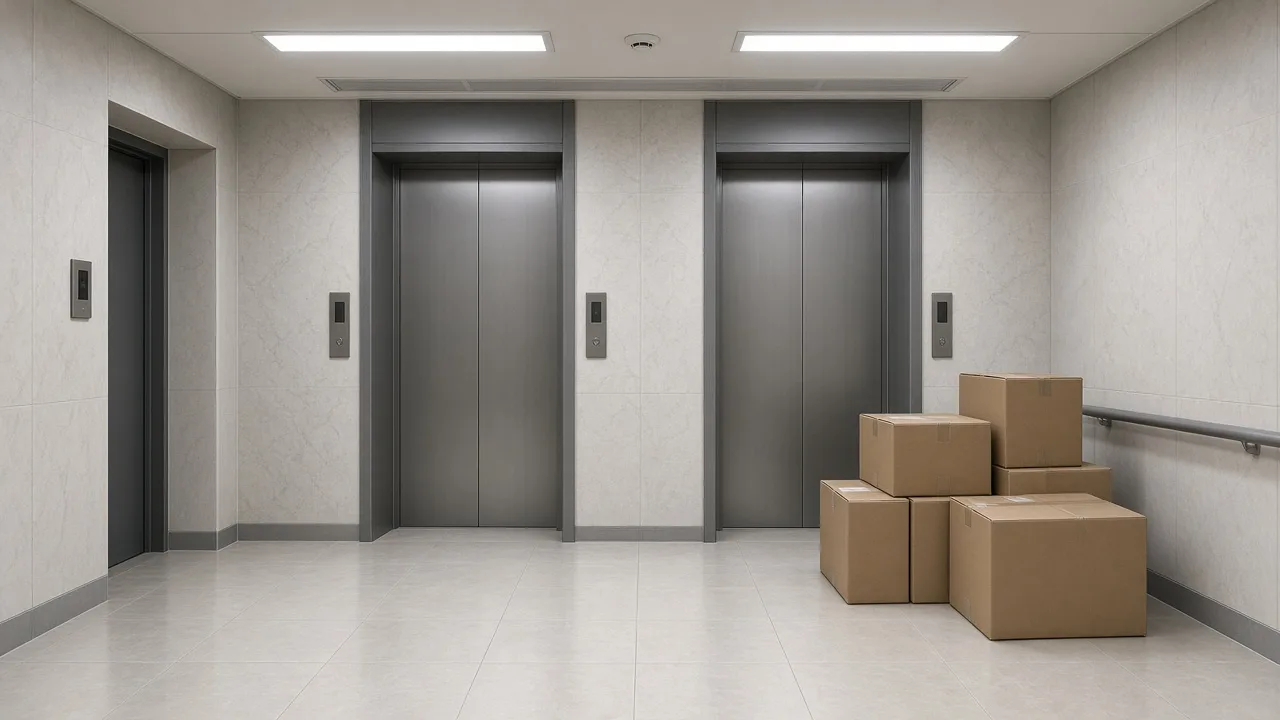
Most Koreans live in apartments, so the last part of the address matters most in practice. IBS explains that an address such as “102-dong 304-ho” is sometimes shortened to “102-304”. The first number is the building within the complex. In the unit number, the last two digits are the unit and the first digit or digits are the floor, so 304 is the third floor, unit 4. IBS adds that in many complexes an elevator serves two units per floor, so units 3 and 4 share an elevator and form what is called a “line” (라인), written 3~4 line. In underground car parks, the signs tell you both the building and the line, for example “206-dong 1~2 line”.
This is why a delivery person who has the building and unit can find the right door without knowing the street, and why apartment complexes carry so much weight in how Koreans describe where they live. For more on how complexes are named and renamed, see why Korean apartment complexes change their names, and for why apartments dominate, why apartments are popular in South Korea.
Tips for using a Korean address as a foreigner
- Use the road name address on official forms. The Policy Briefing page recommends the road name address for applications. You can check yours on the government’s address site (juso.go.kr), through a phone app or at the district office.
- Copy the address in Korean when you can. It is easier to match against forms and street signs than a transliteration.
- Write dong and ho. For an apartment, a delivery needs the building and unit, even if the road address alone is correct.
- Expect both formats. Older businesses and friends may still give a lot-number address. If a lot number is all you have, the government’s address site can look up the road name address. (Mapping works differently in Korea; see why Google Maps is limited in South Korea.)
- Read street signs by their numbers. IBS shows that an intersection sign lists the building numbers on each side, for example lower numbers to the left and higher numbers to the right, so you know which way to walk.
FAQ
What is a Korean road name address?
It is the official address format made of the city, district, road name and building number, with the apartment building and unit added if there is one. It has been the only legal address since 1 January 2014.
What is the difference between a road name address and a lot-number address?
A road name address uses the road and a building number. A lot-number address (jibeon) uses the neighborhood and a land parcel number, with no road name.
What do daero, ro and gil mean?
They are road types. Daero is a boulevard with more than eight lanes, ro is a road with two to seven lanes and gil is any other street. A number plus “beon-gil” marks a side street.
What do dong and ho mean in an apartment address?
Dong is the apartment building number within a complex and ho is the unit. In 102-dong 304-ho, the building is 102 and the unit 304 is on the third floor.
Do building numbers go up or down along a road?
They rise away from the start of the road, with odd numbers on the left and even numbers on the right. A road from west to east starts in the west, and one from south to north starts in the south.
Sources and further reading
- Ministry of the Interior and Safety, press release “Road name addresses fully used from 1 January” (2 January 2014, Korean): mois.go.kr
- Korea Policy Briefing, “How to check your road name address” (3 January 2014, Korean): korea.kr
- Institute for Basic Science, “Old and New System: Dual Address Systems” (English): centers.ibs.re.kr
- Road Name Address Act Enforcement Decree, Article 7 (road sections and base numbers, Korean): govbrief.kr
- Road Name Address Act Enforcement Decree, Article 23 (building numbers, Korean): govbrief.kr
- Road Name Address Act Enforcement Rule, Article 3 (base number intervals, Korean): govbrief.kr
- Government address service: juso.go.kr